
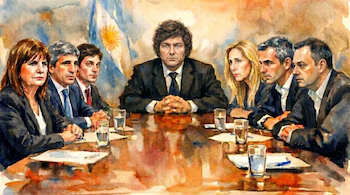
Rebelión in the Libertarian Galaxy: Milei Navigates Internal Chaos
Internal Conflicts Among Advisors
Manuel Adorni’s attempt to mediate internal rifts within Javier Milei’s administration exemplifies the ongoing turmoil. During a recent meeting with Santiago Caputo, Adorni sought clarifications regarding Caputo’s strong statements against Martín Menem. Caputo’s response, “Because this time I have proof,” highlights the delicate balance within the government. The ensuing fallout led to Milei himself intervening to exonerate Menem from accusations about fake accounts aimed at undermining the government. Instead of aligning with Milei, Caputo pushed back, stating that the President was being misled, which intensified the internal conflict.
Upcoming Cabinet Meeting
In light of these tensions, a forthcoming tedeum promises to be pivotal for the Casa Rosada. Cabinet discussions are expected to address this internal strife as officials strive to present a united front. Yet, with opponents absent and factions dividing from within, Milei is left managing a self-created chaos. He seeks alliances with provincial governors, leveraging potentially favorable economic indicators to weather the storm.
Economic Challenges and Opportunities
Despite a 3.5% economic growth in March, the momentum is forecasted to stall in April. This slowdown, referred to as “the serruchito” (a colloquial term for a sudden drop), is underscored by various indicators. The consulting firm PxQ reported declines in essential sectors such as oilseed milling and cement dispatches. Auto registrations are also down, reflecting broader economic anxieties.
Luis Caputo, the Minister of Economy, warned that the government lacks flexibility to make further cuts, placing pressure squarely on Milei. In a surprising maneuver, Milei announced a reduction in export taxes in a bid to reclaim political control amidst the ongoing scandals.
Tenuous Fiscal Situation
Political analysts suggest Caputo’s remarks signify a broader inability to push through significant reforms like pension restructuring, a contentious topic that, if Milei holds onto power past 2027, will likely be revisited. Currently, both the political climate and external pressures from the International Monetary Fund hinder such moves.
Furthermore, the government’s urgent need to manage a $31 billion debt maturity in 2027 looms large, and with the ongoing currency controls, investor confidence is shaky.
The Reaction from the Provincial Governors
While Milei’s backing from certain governors appears solid, their positions amid fiscal uncertainties create a precarious alliance. The need to not have candidates posed against them from the central government is a key motivator for regional leaders.
As discussions heat up over the proposed “zona fría” law, which recently passed in the lower house, many governors, notably Martín Llaryora of Córdoba, are beginning to push back, showcasing their authority and reluctance to compromise their interests.
Future Political Landscape
The political landscape is fraught with challenges. Llaryora’s inclination toward broader opposition unity, even contemplating collaborations that exclude hardline kirchnerismo, indicates shifting alliances. Meanwhile, Milei’s appeals for patience as he offsets internal strife with narrative control may not be enough to stave off the risks posed by strong opposition figures like Mauricio Macri and Patricia Bullrich.
As the current void of strong opposition persists, the internal chaos plaguing Milei’s administration raises significant questions about stability and governance in the months leading up to future elections. The upcoming discussions and resolutions will determine whether Milei can maintain his control or face an uprising from within—an internal rebellion in his own “libertarian galaxy.”