
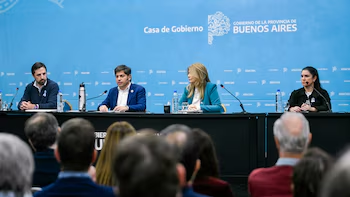
Opposition Intensifies Debate on IOMA Amid Health Crisis
The ongoing discourse around the Medical Assistance Work Institute (IOMA) has gained traction as the opposition in the province of Buenos Aires pushes for accountability amid rising tensions with the provincial government. The discussion reached a boiling point during the week of the Federal Health March, where issues of funding and governance were at the forefront.
Demands for Accountability
Calls for clarity regarding IOMA’s operations and its financial status have intensified, particularly from opposition figures in the Buenos Aires provincial legislature. They are insisting on the presence of the institute’s president, Homero Giles, or the provincial Minister of Health, Nicolás Kreplak, to address pressing concerns related to the managing and funding of health services. Kreplak has argued that IOMA is merely a reflection of the broader issues affecting the social work system, primarily due to the definancing by the national government and the economic policies of the current administration.
Provincial deputies and senators from the La Libertad Avanza coalition recently visited IOMA’s headquarters to submit a formal request for information regarding its operation and financial obligations. Their inquiries include pressing questions about debt with healthcare providers, service interruptions, and mental health care, indicating a state of crisis that demands urgent attention.
Political Maneuvering and Legislative Proposals
Legislators such as Fernando Rovello from the PRO party have been proactive in championing issues pertaining to IOMA’s functioning. After unsuccessful attempts earlier in the year to summon Giles to testify, he has renewed efforts to push the agenda as a member of a collaborative group seeking transparency in IOMA’s dealings. The group’s latest proposal, which bears multiple signatures from various political factions, calls for the interpellation of Giles, a step that underscores the growing urgency around the issue.
Furthermore, Priscilla Minnaard has proposed the formation of a bicameral commission aimed at monitoring IOMA’s performance and ensuring financial transparency. This measure is intended to protect the rights and health of its over 2 million members while scrutinizing the allocation of funds. The absence of members from the ruling executive bloc in the leadership of this proposed commission is a significant political statement.
Government Response and Health System Crisis
Kreplak has countered criticisms by emphasizing that the challenges facing IOMA are symptomatic of a wider health crisis stemming from national economic policy decisions. He argued that all sectors of the health system, including public hospitals and private clinics, are feeling the effects of financial instability, which has led to a surge in membership within IOMA as people turn away from traditional health care providers.
Despite the issues at hand, Kreplak maintains that IOMA continues to enhance its services and benefits, contrasting sharp criticisms from the opposition. After enduring extended scrutiny, it is likely that further legislative developments will emerge, particularly regarding the accountability of figures like Kreplak and Giles in the face of mounting crises within the health system.
Conclusion
The debate surrounding IOMA is emblematic of larger tensions between provincial governance and national policy issues, raising important questions about health care funding and accountability in Argentina. As the opposition presses on for more significant changes and transparency, the future of IOMA and its role in providing health care will remain a high-stakes topic on the political agenda.