
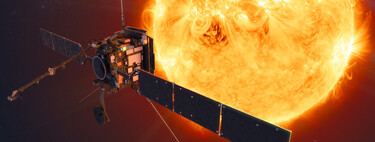
SMILE: A Groundbreaking Mission Between Europe and China
Finally, despite a delay last April, the SMILE mission has been successfully launched. This remarkable collaboration between China and Europe aims to delve into how solar winds interact with Earth’s magnetosphere. The spacecraft took off from the Kurú Space Port in French Guiana at 03:52 GMT (05:52, Spanish peninsular time), kicking off a mission expected to span at least three years, although some preliminary activities must be completed before the main work can commence.
Journey to Final Orbit
In the initial 25 days following its launch, SMILE will execute 11 engine starts, which are crucial for gradually adjusting its orbit around Earth’s poles. This intricate maneuver will see the spacecraft ascending to 121,000 km above the North Pole and dropping to 5,000 km above the South Pole. By approximately June 13, SMILE will arrive at its final orbit and be ready for fine-tuning of its instruments.
The Final Deployment
Once in orbit, mission engineers on Earth will remotely verify the operation of all SMILE instruments. Some instruments will need to change their configurations, which includes deploying the magnetometer arm and opening the X-ray camera shutter and UV camera cover. These steps are essential for the mission to unfold successfully.
The Science Behind SMILE
First Images on the Horizon
After confirming that all systems are functional, SMILE will start sending its first images back to Earth three months post-launch. This mission is particularly ambitious, as it will be the first to capture global images of the interaction between solar activity and Earth’s protective shield using both X-ray and ultraviolet imaging.
Understanding Solar Storms
Gaining insights into these solar storms is imperative, as they not only create stunning auroras but can also disrupt telecommunications, posing a significant threat to modern infrastructure. Understanding these phenomena and improving prediction methods can mitigate potential adverse effects.
A Mission Designed to Last
Duration and Future Prospects
The SMILE mission is designed to last for three years, with a focus on achieving its main scientific objectives within this timeframe. The investment from both the European and Chinese space agencies has ensured this duration. However, this does not necessarily mean that the spacecraft will be decommissioned after three years. If SMILE continues to function well, its mission could be extended.
Lessons from Predecessors
A notable predecessor to SMILE is the Cluster mission, which aimed to measure Earth’s magnetic environment. Launched in 2000, it was expected to operate for just two years but continued until 2024 due to its excellent operational condition. Similarly, it is possible that SMILE may enjoy an extended mission life.
For now, the mission must reach its operational orbit. Once there, the true journey of science and discovery begins.