

In 1995, Nvidia introduced its NV1 chips, marking the beginning of a revolution in the gaming industry. This tradition of annual GPU launches has continued for 30 years, but 2026 will see a significant change.
What has happened? The landscape has drastically shifted due to the rise of artificial intelligence (AI). This booming industry is reshaping both the technological and social arenas, with Nvidia at the forefront. Their early investment in leveraging GPUs for AI applications has dramatically paid off.
Gamers in the background. The explosion of the AI sector has resulted in Nvidia prioritizing AI chips for data centers over gaming GPUs. From a business perspective, this is a sound decision: AI chips boast profit margins nearing 75%, owing to minimal competition and substantial price control.
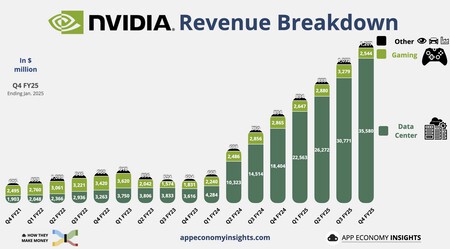
Data centers win by a landslide. Volume plays a critical role here. Not only are the unit prices higher for AI chips, but the handling volume in data centers dwarfs that of gaming GPUs. Recent analyses indicate that revenues began to soar in the second fiscal quarter of 2024, making Nvidia the most valuable company globally.
No GPUs for gaming in 2026. Following the launch of the RTX 5000 series in January 2025, Nvidia was expected to introduce “SUPER” iterations this year. These models were to feature denser GDDR7 memory modules, but a global memory crisis and a pivot towards AI have left gamers without new options for the first time in three decades.
And the RTX 6000 even further. The situation worsens for the anticipated RTX 6000 series, based on the Rubin architecture. Current estimates suggest these GPUs won’t even begin production until late 2027, pushing their potential release to 2028 or later.
Do we really need more powerful GPUs? Some users on Reddit expressed frustration at Nvidia’s decision not to release new gaming graphics cards, yet others pointed out that many current games can run smoothly even on integrated GPUs. It seems the existing generation of GPUs is more than capable of handling even the most demanding titles.
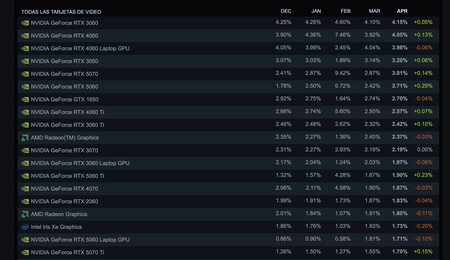
The April 2026 Steam survey indicates that the RTX 5000 coexists with other popular generations, including the RTX 4000 and RTX 3000. Source: Steam.
The data confirms it. The April 2026 Steam Survey reveals that the RTX 5000 holds nearly 24% market share, while the RTX 4000 commands 35% and the RTX 3000 captures 16%. With so many gamers already invested in their current setups and skyrocketing prices, it is unlikely many will invest in new GPUs anytime soon.
There is nowhere to run. Nvidia’s strategy of sidelining gamers presents a problem: few high-performance alternatives exist. AMD continues to compete but hasn’t captured significant interest. Intel’s recent launches have not impacted the high-end market where Nvidia holds a monopoly. This trend underscores the reality that Nvidia’s focus is clearly on more lucrative ventures.