
Current State of the Conflict
The ongoing conflict in Ukraine has reached a crucial juncture. Despite both sides engaging in a fleeting ceasefire from May 9 to 11, hostilities resumed quickly, revealing the instability of the situation. The conflict monitoring system, employing satellite technology, indicates no significant dip in fighting intensity. However, evidence suggests that the course of the conflict is shifting.
Rising Casualties and Stalled Offensives
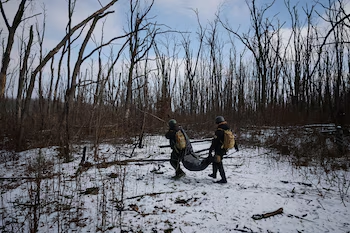
Russia’s military struggles are becoming increasingly apparent. The country has incurred an astonishing number of casualties, with estimates indicating that between 280,000 and 518,000 Russian soldiers have died since the beginning of hostilities. This staggering toll, which encompasses total casualties of approximately 1.1 to 1.5 million, implies a catastrophic impact on Russia’s fighting-age male population. Our analysis is founded on reliable estimates from various intelligence agencies and independent researchers.
Conversely, Ukrainian casualties are slightly more ambiguous, with estimates suggesting a total of 600,000 by the year’s end, including fatalities ranging from 100,000 to 140,000. This could point to a greater proportional loss for Ukraine’s prewar population compared to Russia’s.
The Difficulty of Accurate Reporting
Recent data compiled by independent media outlets like Meduza and Mediazona sheds light on Russian military losses. Their database lists over 218,000 identified soldiers who have died, using obituaries and social media accounts to document these losses meticulously. The data combines this information with legal documents that declare soldiers missing or deceased, enabling a clearer picture of the human toll.
Challenges on the Battlefield
Amid this grim tally, actual battlefield progress appears minimal. Mapping the battlefield has become increasingly complex. Ukrainian drones have made it difficult for Russian troops to maneuver without being targeted. While some reports suggest Russian forces might be incrementally gaining ground, this is described as capturing approximately 220 square kilometers in a year—equating to a mere 0.04% of Ukraine’s territory.
In contrast, a 30-day moving average indicates that Ukrainian forces have successfully reclaimed about 189 square kilometers. This suggests that Ukraine is beginning to regain lost territory, potentially setting the stage for future offensives.
Potential Turning Points
The current scenario raises crucial questions about the nature of upcoming military strategies. With Russia appearing to stall, speculation abounds that it could be preparing for a major offensive in the summer. Should this occur, it may significantly impact the conflict’s trajectory.
Conclusion
The situation in Ukraine remains volatile but highlights a troubling trend for Russia. With unprecedented military losses and stagnant advances, the balance of power may tilt increasingly in favor of Ukrainian forces. As the conflict continues, the implications of these developments will be profound, not just for the immediate region but for global geopolitical dynamics.