
General Anesthesia and Its Impact on the Brain
Understanding General Anesthesia
For many patients, the thought of entering an operating room is often accompanied by the comforting notion of being “put to sleep.” General anesthesia has long been perceived as a deep, temporary sleep from which one awakens without any recollection of the surgical procedure. However, recent studies, particularly from Yale University, challenge this simplistic view.
Yale University’s Groundbreaking Findings
Recent research published in the Proceedings of the National Academy of Sciences reveals that the brain under anesthesia enters a state that is not merely a form of natural sleep. Contrary to traditional beliefs, the study indicates that the brain exhibits a complex combination of neurological patterns reminiscent of both deep sleep and coma, depending on the specific brain regions observed.
The Complexity of Anesthesia
The findings raise essential questions about the mechanisms of anesthetics on the brain. Notably, why do certain individuals, especially older adults, frequently experience post-operative confusion, memory issues, or cognitive difficulties? Historically, the medical field has concentrated on monitoring vital physical parameters such as blood pressure and pulse rather than focusing on the brain, the organ directly affected by anesthesia.
Innovations in Brain Monitoring
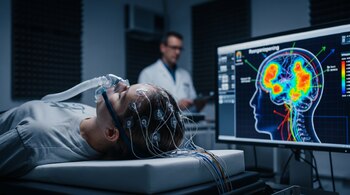
This evolved understanding has been facilitated by advancements in brain monitoring technologies. Researchers utilized electroencephalography (EEG) to meticulously map brain activity in real time, employing a network of 20 electrodes across the scalp. This comprehensive approach allowed them to analyze brain activity beyond just the frontal region, revealing unexpected results.
Anesthesia vs. Sleep: Key Differences
While both sleep and anesthesia present similar external appearances, where patients lie still with closed eyes, the internal workings of the brain are vastly different. According to Dr. Janna Helfrich, the lead author of the Yale study, the notion that anesthesia aligns purely with sleep or coma is overly simplistic. There exists a unique neurological component associated with anesthesia not fully encapsulated by either state.
Cognitive Recovery Post-Surgery
Natural sleep provides vital restorative functions for the body, including memory consolidation and cellular repair. In contrast, general anesthesia lacks these biological benefits, prompting specialists to investigate ways to maintain brain states during surgery that are closer to natural sleep rather than the coma-like patterns currently observed.
The Call for Personalized Anesthesia
Given that not all patients react to anesthesia uniformly, there is a pressing need for personalized approaches in anesthetic administration. Currently, many operating rooms primarily monitor heart rate and blood oxygen levels, often overlooking brain activity. Researchers advocate integrating EEG technology to adjust anesthetic doses according to individual brain responses dynamically.
Conclusion and Future Directions
Looking ahead, the goal is to create anesthetic protocols that prioritize brain safety and expedite cognitive recovery post-surgery. Moving forward, understanding the intricacies of how the brain functions during general anesthesia will be pivotal in developing safer, more effective anesthetic practices. Such advancements not only aim to alleviate pain during procedures but also ensure a more seamless recovery post-operation, safeguarding brain health.