
Public Investment Overview
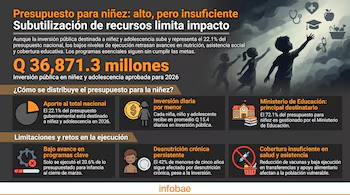
The Central American Institute of Fiscal Studies (Icefi) and Save the Children Guatemala highlighted significant concerns regarding public investment for children and adolescents (IPNA). As of the end of the first quarter of 2026, IPNA reached Q 36,871.3 million, accounting for 22.1% of the Central Government’s budget, but with only a 20.6% execution rate. This raises alarms as 42% of children under five continue to suffer from chronic malnutrition, according to the National Health Development Survey 2025.
Budget Allocation and Utilization
Throughout the first quarter up until March 31, a nominal increase of Q 1,349 million (3.8%) was noted due to the recent Decree 3-2026 passed by the Congress. Most of the allocated funds are directed towards the Ministry of Education, which utilizes 72.1% of this budget. However, despite this allocation, there appears to be a vast discrepancy in effective utilization, particularly in essential services like education, health, and nutrition.
Challenges in Effective Implementation
Per capita daily investment stands at Q 15.4 (approximately USD 2.0) per child, but many programs are either underfunded or poorly executed. The Departmental Development Councils (Codede) experienced a Q 418.3 million cut for critical areas, such as water, sanitation, and educational infrastructure, with a mere 2.3% of allocated funds effectively used by the end of March.
The Ministry of Public Health and Social Assistance (MSPAS)‘s efforts towards preventing childhood mortality and chronic malnutrition also fell short, recording only 13.3% execution against its budget.
Educational Sector Impact
The Ministry of Education reported cuts in various key programs for adolescents, affecting areas like industrial technician training and scholarships, resulting in inadequate financial support for essential educational initiatives.
Similarly, only 8.6% of the budget for the school health program was utilized, indicating a troubling trend in critical educational and health areas.
The Way Forward
The Icefi has called for increased budget allocations, particularly for vaccination programs at MSPAS, where an urgent uptick in measles cases has been observed. Additionally, addressing chronic childhood malnutrition and increasing access to clean water are paramount to improving child health outcomes in Guatemala.
Continued underexecution remains a significant barrier to achieving vital public goals for children, making the call for reform and targeted investment in these areas more critical than ever.