
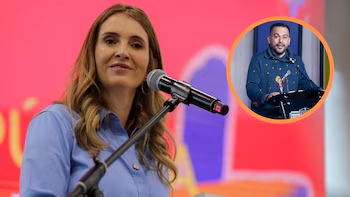
Paloma Valencia’s Response to Minister Edwin Palma on Energy Proposals
Background of the Controversy
Senator Paloma Valencia, a presidential candidate from the Democratic Center, recently engaged in a heated exchange with Minister of Mines Edwin Palma over proposals aimed at reducing energy costs in Colombia’s Caribbean region. During a press conference, Valencia outlined her plans to alleviate the high energy prices impacting one of the country’s most vulnerable areas.
Valencia’s Energy Proposals
Valencia asserted that 40% of Colombia’s extreme poverty is concentrated in the Caribbean, where energy rates are among the highest. She highlighted that residents experience double the frequency of power outages compared to the national average. Among her initiatives, Valencia proposed a reduction in electricity bills for the lowest-income users, particularly focusing on stratum one households.
Minister Palma’s Criticism
Minister Palma criticized Valencia’s proposals via his X account, claiming that they lacked novelty and merely reiterated policies already in place. He stated that the typical subsidy for stratum one users is around 60%, disputing Valencia’s claim of 50%. Palma accused the senator of being either misinformed or disingenuous in her proposals, arguing that her ideas could negatively impact the lowest-income groups.
Valencia’s Counterarguments
In response, Valencia questioned Palma’s dismissive tone, stating, “It says more about you than about me.” She clarified that her intention was not to reduce the existing subsidy but to expand benefits for vulnerable users by increasing the threshold for subsidized electricity consumption. Specifically, she suggested raising the current consumption limit from 173 kWh/month to 250 kWh/month for low-altitude municipalities on the Caribbean coast.
Addressing Policy Effectiveness
Valencia further challenged the effectiveness of the current energy policies mentioned by Palma, emphasizing the need for concrete results rather than mere declarations. She criticized the lack of tangible outcomes from initiatives like Colombia Solar and Fenoge, which she claimed have not effectively translated into relief for the residents.
Demand for Accountability
The senator called for transparency and accountability in the implementation of energy policies. She advocated for measurable goals regarding the expansion of subsistence consumption and the promotion of renewable energy, such as solar panels. Valencia asserted that her proposals aimed to secure verifiable results rather than continue the status quo of unmet promises.
Conclusion: Critique of Government Management
In her concluding remarks, Valencia expressed dissatisfaction with the national government’s efforts over the past four years, maintaining that residents in the Caribbean region still endure exorbitant energy costs. She emphasized the urgent need for action and accountability, positioning herself as a candidate who seeks to genuinely address the energy crisis impacting some of Colombia’s most disadvantaged citizens.
This exchange encapsulates the ongoing debate about energy affordability and the effectiveness of government policies in addressing the pressing needs of vulnerable communities in Colombia.