
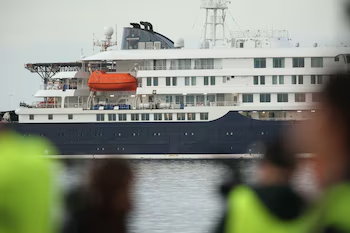
Government’s Decision on MV Hondius: Key Reasons for Arrival in the Canary Islands
The arrival of the MV Hondius cruise ship at the port of Granadilla (Tenerife) has generated significant attention, particularly given the backdrop of a hantavirus outbreak affecting its passengers. The Government of Spain’s decision to accept the vessel, despite local opposition, is rooted in pressing maritime health and safety considerations.
Maritime Safety and Urgent Medical Intervention
The situation aboard the MV Hondius necessitated immediate action, as highlighted by Ana Núñez Velasco, the general director of the Merchant Navy. With operational limitations restricting the ship’s capability to effectively manage its onboard population, urgent medical assistance was required. The risk of meteoro-logical deterioration posed additional challenges, making the indefinite stay of the ship at sea untenable for the safety of those on board.
Authorities emphasized that keeping the vessel on the high seas could dangerously jeopardize human life, thus underscoring the measure’s urgency. The decision to allow docking is guided by standards and protocols that prioritize life safety.
Health Expertise and Controlled Environments
From a public health perspective, the Ministry of Health indicated that the epidemiological control would be more effective within a controlled port environment compared to maintaining the ship’s presence on the open sea. Granadilla de Abona was deemed a suitable location due to its industrial characteristics and relative isolation, helping to minimize interaction with the civilian population and limiting the risk of outbreak spread.
The scenario reaffirmed the importance of operational logistics, including space for necessary health interventions. The relatively isolated nature of Granadilla allows health authorities to manage disembarkation safely and efficiently while controlling any further risk of contagion.
Legal Framework Supporting the Decision
The Spanish government’s decision found its basis in Article 299 of the Consolidated Text of the Law on State Ports and the Merchant Navy, which empowers the administration to mandate the reception of vessels under circumstances posing risks to maritime safety or public health. This legal foundation allows for controlled anchoring and monitoring by health experts, rather than standard docking, mitigating the potential risks presented by the situation.
Additionally, provisions exist for the Maritime Rescue and Safety Society (SASEMAR) to assist in towing the ship if necessary, ensuring compliance with maritime safety regulations while coordinating with the Granadilla Port Authority.
Operational Success Amidst Challenges
Despite challenges, Minister of Health Mónica García declared the operation a success, noting that all 151 individuals aboard were asymptomatic upon arrival. Initial disembarkation involved Spanish nationals and a World Health Organization (WHO) doctor, with additional flights arranged for international passengers from various countries, including Germany and Australia.
The coordination reflects a commitment to critical health intervention and the smooth execution of an evolving operational plan aimed at safeguarding public health. The vessel’s crew will ultimately accompany the ship back to its homeport in the Netherlands after ensuring all passengers’ safety.
Conclusion
The government’s decision to receive the MV Hondius into the port of Granadilla exemplifies how maritime health and safety protocols can effectively manage emergencies. Prioritizing human life and public health, while adhering to legal frameworks, remains paramount in navigation through such crisis scenarios. The collaborative efforts of government authorities, health professionals, and maritime services serve as a model for addressing similar challenges in the future.