
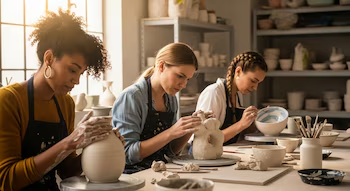
The Mental Health Benefits of Handicrafts and Hobbies
Engaging in handicrafts such as pottery, knitting, or journaling allows people to disconnect from the fast-paced daily grind, providing relaxation and pleasure. Mental health experts agree that these hobbies can induce a state of mindfulness and offer concrete mental health benefits.
Reducing Anxiety and Stress
According to specialists, practicing manual activities helps lower anxiety and stress levels by regulating the nervous system, creating a sense of control and well-being. This is a crucial aspect of mental health, as these activities allow individuals to focus their attention on the present moment rather than ruminating on past events or worrying about the future.
Key Conditions for Effective Crafting
Handicrafts serve as an antidote to anxiety when they meet three main conditions:
- Focused Attention: The task demands your full attention in the present moment.
- Repetitive Rhythm: Repetitive movements help regulate the nervous system.
- Proper Challenge Level: The activity should offer a balance between challenge and skill—neither too easy that it becomes boring nor too difficult that it leads to frustration.
Dr. Mariam Holmes, a psychologist specializing in mindfulness, explains that these activities engage the senses, providing sensations like the weight of clay or the feel of yarn in your fingers, creating a mindful experience.
Understanding Mental Activation During Crafting
When engaged in a manual activity, the brain activates sensory, motor, and attentional circuits while reducing the hyperactivity of the default mode network, linked to mind-wandering and repetitive thoughts. As the parasympathetic nervous system activates, heart rate and respiration slow down, reducing cortisol—the stress hormone.
Neurologist Alejandro Andersson describes activities like crafting as a form of “awakened meditation” when they involve repetition, soft concentration, and a low level of demand.
The Science Behind “Awakened Meditation”
Activities that foster sustained attention, akin to meditation, help to anchor one’s awareness on movements, textures, and colors, thus allowing for a gradual exit from mental autopilot. Manual tasks promote emotional regulation and stress reduction in a manner similar to traditional meditation, yet they provide a tactile, sensory experience.
Incorporating Handicrafts into Daily Life
For those with busy schedules, specialists recommend simple, repetitive, and low-demand activities. These could include:
- Simple Knitting or Crocheting: Engaging in straightforward stitches can be calming.
- Molding Clay: The tactile sensation of kneading clay helps with grounding.
- Drawing or Coloring: Free drawing or coloring mandalas fosters creativity without the pressure of achieving a perfect result.
Crafting for Specific Needs
Not every hobby yields the same effect for everyone. To effectively reduce stress, an activity should be engaging, offer a visible outcome without competition, and allow individuals to lose track of time. It’s important that the hobby does not rely on screens or notifications.
Dr. Holmes emphasizes that perfectionism can turn a potentially calming activity into an added pressure. Therefore, balancing challenge and skill is vital for maximizing the benefits.
Conclusion: A Return to Basics
In today’s fast-paced digital culture, returning to manual activities offers a tangible way to regulate emotional states through physical engagement. Andersson concludes that handicrafts are not just a fleeting trend; they serve as a practical method for managing stress and enhancing mental well-being. Engaging the hands can help reclaim calmness, focus, and presence, making it a worthwhile endeavor for mental health.