
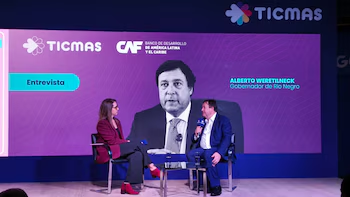
Building a New Energy Argentina: Insights from Alberto Weretilneck
The Importance of Education and Employment
In the recent discussions at the 50th International Book Fair in Buenos Aires, Alberto Weretilneck, the Governor of Río Negro, emphasized the critical intersection of education and employment. Collaborating with Ticmas and the Development Bank of Latin America and the Caribbean (CAF), he explored how to effectively align workforce needs with educational offerings. The economic impact of the Vaca Muerta shale formation, located in neighboring Neuquén, presents unique opportunities and challenges that require a localized approach.
Regional Economic Diversity and Challenges
Río Negro is characterized by diverse regional economies, such as tourism in Bariloche and El Bolsón and agriculture in the Alto Valle and Valle Medio. This diversity creates a complex landscape where sectors like gas and oil compete with traditional industries like agriculture. The goal is to design educational and employment policies that cater to these varied economic realities while supporting local communities.
Curriculum Reforms for the Energy Sector
In partnership with the Argentine Institute of Oil and Gas (IAPG), Weretilneck initiated significant reforms to technical school curricula to meet the demands of the energy sector. By updating the education system for 39 technical schools, the new approach ensures that students are equipped with relevant skills for emerging job markets. This shift not only garners community support but promises a pathway to formal employment after graduation, addressing the pressing need for skilled labor in the region.
Collaboration Between Public and Private Sectors
Addressing the role of the private sector, Weretilneck acknowledged the necessity of collaboration between businesses and public education. As the energy industry evolves, there is an increasing need for workers with specialized skills, such as technicians and machinery operators. The establishment of institutions like the Vaca Muerta Institute aims to bridge the gap between education and industry needs, laying the groundwork for a skilled workforce capable of supporting large-scale projects.
Gender Inclusion in the Workforce
A noteworthy achievement in this initiative is the integration of women into the energy sector. With 600 women currently participating in significant energy projects, the shift is not only a step towards gender equality but also enhances workforce diversity. This success illustrates that effective training can take place both in educational institutions and hands-on projects, recognizing real-world applications as critical for skill development.
Tackling Migration and Workforce Expectations
Internal migration due to resource-driven job availability poses challenges in managing public expectations. While 3,800 people migrated to Río Negro last year, the government has established measures to ensure that a majority of job opportunities benefit local residents. Additionally, language training programs aim to equip the local workforce, broadening employability across various sectors.
Navigating a Global Economy
As Argentina increasingly integrates into the global economy, creating pathways from traditional labor to international standards in industries like oil and gas is crucial. The region is slowly diversifying its economic activities, including mining and energy, helping to elevate living standards and job stability. However, the transition requires careful planning and long-term strategies to manage both new opportunities and emerging threats.
Future Considerations for Lifelong Learning
The evolving nature of technology demands a commitment to continuous education. Adapting to changes such as artificial intelligence and innovation in energy requires not only newly educated individuals but also retraining for those already in the workforce. While initiatives specifically targeting older workers are not yet established, efforts to rapidly prepare the workforce for current industry needs are underway.
Conclusion
Alberto Weretilneck’s vision for a new energy Argentina encompasses educational reform, gender inclusion, and proactive measures to align workforce capabilities with emerging market demands. The collaboration between public and private sectors, tailored training programs, and a focus on long-term strategies set a precedent for sustainable economic growth in Río Negro and beyond. The ongoing journey reflects a commitment to not just adapt but thrive in a rapidly changing global energy landscape.