
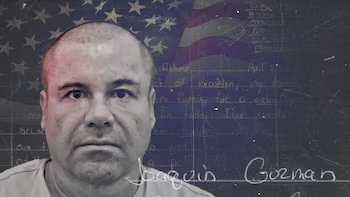
El Chapo’s Plea: A Fight for Justice
Joaquín Guzmán Loera, widely known as “El Chapo,” has recently sent a striking letter to the federal court in Brooklyn, New York, contesting the life sentence imposed upon him. This letter presents a unique narrative from the infamous former leader of the Sinaloa Cartel, as he seeks to reshape his public image and contest the judicial decisions against him.
Claims of Misconduct
In his letter, Guzmán vehemently denies the accusations of drug trafficking, organized crime, and other felonies that led to his conviction in 2019. He asserts that he has been wrongly held responsible for actions he did not commit. He laments, “They blamed me for things I didn’t do, all because of who I am.” This raises questions about how perceptions of identity influence judicial outcomes and public opinion.
Reclaiming a Positive Legacy
Guzmán argues that during his time in Mexico, he was recognized more for his “good deeds” than for any illicit activities. “I didn’t hurt anyone,” he claims, reflecting an attempt to highlight a narrative of redemption and integrity. This appeal to his character portrays a stark contrast to the violent image often associated with his criminal empire.
Continuation of Correspondence
This letter marks yet another instance of Guzmán reaching out to U.S. judicial authorities since his conviction. He maintains that media portrayal and public notoriety skewed the trial’s fairness, suggesting that a constructed image limits equitable judicial processes. Guzmán’s correspondence seeks to unveil what he believes is a misjudgment by the courts due to his infamous reputation.
The Legal Battle Continues
The details of Guzmán’s trial, which spanned from late 2018 to early 2019, illustrate the complexity of his case. U.S. prosecutors established a narrative that he not only directed drug trafficking operations but also orchestrated violence against rival factions. These claims were substantiated by testimonies from former cartel members and law enforcement agents. Despite this, Guzmán’s new letter advocates for a fresh trial, emphasizing “the evidence was not compelling.”
Conclusion: An Unusual Perspective
El Chapo’s recent letter paints an intriguing picture of a man desperate to reclaim not just his freedom, but also his identity. His insistence on the wrongful nature of his trial and the vibrant narrative he presents about his life in Mexico create a compelling counter-narrative in a story that is predominantly characterized by crime and violence. As he continues this legal battle, the implications of public perception and judicial integrity remain at the forefront of this saga.
This episode not only captures the life of one of the world’s most notorious traffickers but also raises essential questions about justice, identity, and the power of narrative in shaping public perception.