
The Movement Towards a 40-Hour Work Week in Mexico
On May 1, Labor Day, Mexico took a significant step towards labor reform by initiating a transition to a 40-hour work week. The new labor law promises to change the landscape of employment in the country.
Phased Reduction of Working Hours
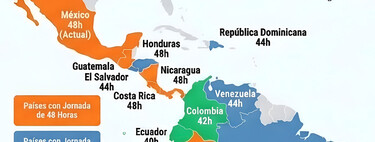
Historically, Mexico has held one of the longest working hours globally. Currently set at 48 hours per week—a standard unchanged since 1917—the new law will gradually decrease this limit. By January 1, 2027, it will drop to 46 hours, followed by further reductions to 44 hours in 2028, 42 hours in 2029, and finally settling at 40 hours per week by 2030. This systematic reduction will help companies adapt without significantly impacting their operations immediately.
Implementation Timeline and Employee Protections
The first significant change arises on January 1, 2027, allowing companies ample time to re-evaluate shifts and contracts. Importantly, the Federal Labor Law safeguards workers from salary reductions during this transition, ensuring that the shift towards shorter hours does not come at the expense of their financial well-being.
New Employer Obligations
The labor reform also imposes new responsibilities on employers, including the mandate to maintain an electronic record of working hours. This time clock requirement, set to begin in 2027, aims to ensure compliance with the new work week structure.
The Mexican Ministry of Labor and Social Security (STPS) will oversee this process and verify adherence. Failure to comply could lead to penalties ranging from 29,327 to 586,550 pesos (approximately 1,431 to 28,624 euros).
Company Readiness: A Challenging Landscape
Despite the adjustments mandated by the reform, a recent study reveals concerning statistics regarding corporate readiness. According to research conducted by EY and reported by Yucatan Diary, 72.7% of 165 surveyed companies are in “tactical paralysis.” This term implies that while they are aware of the impending changes, they have yet to take actionable steps towards compliance. Only 18% feel adequately prepared.
As expert Yeshua Gómez explains, many companies are stalling, primarily due to uncertainty about the financial implications of the reform. A staggering 85% cite cost as a major deterrent, while 71% admit to frequently relying on overtime to operate effectively. For these companies, the focus is not merely about altering the hours listed on paper but resolving existing challenges that often involve exceeding even the current 48-hour limit.
Implications for Overtime and Definitions of Work Hours
With the reform comes a revised definition of the workday. The maximum daytime work limit is now set at eight hours, with nighttime hours capped at seven and mixed hours potentially reaching seven and a half. However, exceptions for extraordinary circumstances remain.
Additionally, overtime allowances will gradually increase, offering leeway for companies still reliant on extra hours. The new cap on overtime will rise from 9 hours in 2026-2027 to 12 hours by 2030, facilitating a transition for sectors heavily dependent on additional work.
The overall intent is to refine the work structure in a way that supports productivity while lessening the burden on workers without imposing sudden, drastic changes.