
Academic Support Initiatives in Guatemala: A Path to Equity
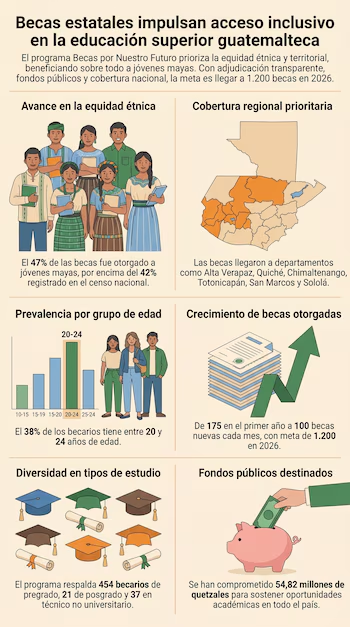
The Scholarships for Our Future program in Guatemala has made significant strides in addressing educational disparities, particularly for historically marginalized communities. With over 502 beneficiaries in just over a year, the initiative aims to enhance access to higher education and vocational training.
Socioeconomic and Territorial Focus
President Bernardo Arévalo underscored the transformative nature of these scholarships, stating that behind each statistic are stories of dreams and aspirations. The program allocates 54.82 million quetzals to support 454 undergraduate, 21 postgraduate, and 37 non-university technical students. This financial aid represents a comprehensive approach to catering to varied educational needs across Guatemala.
The expanding distribution of scholarships demonstrates a deliberate effort to include individuals from diverse socioeconomic backgrounds, especially those in rural areas. The current awarding rate of one hundred scholarships monthly marks a notable improvement from the initial 175 beneficiaries during the program’s first year. The goal is to reach 1,200 scholarships by 2026.
Enhanced Selection Process
In a move toward transparency and fairness, the selection process utilizes a computer-based algorithm. This automated system reviews socioeconomic and academic profiles, reducing human bias during the adjudication process. This choice highlights a commitment to equitable access, allowing for selections that cater specifically to the needs of those historically underrepresented in education.
Indigenous Representation
Notably, 47% of the scholarship recipients belong to the Mayan population, surpassing the 42% recorded in the latest national census. This representation is crucial, as the Mayan community has historically faced significant barriers in education. The predominant age group among the scholarship holders is 20 to 24 years, emphasizing the program’s focus on empowering young adults.
Fields of study include Legal and Social Sciences, Social Work, Agronomic Engineering, and Industrial Engineering. This lack of restrictions on the choice of careers allows beneficiaries to pursue paths that best match their interests and community needs.
The Role of Technology
The scholarship application process is streamlined through a digital platform designed for ease of access. Optimizations include a simplified registration system and an online registry to track beneficiaries. This transparency ensures accountability and fosters public trust in the program.
A Catalyst for Social Change
The scholarship program is part of broader efforts to promote educational development as a catalyst for social change in Guatemala. The success stories of individuals like Reina, a young Quiche Mayan woman, highlight the real-world impacts of these initiatives. She obtained a scholarship to study Legal Sciences, overcoming familial and societal obstacles, demonstrating how educational opportunities can drive community progress.
Conclusion
The Scholarships for Our Future program showcases a significant advancement in educational equity in Guatemala. By focusing on socioeconomic and territorial profiles, it aims to uplift historically marginalized groups, particularly the Mayan population. As the program continues to grow, it paves the way for a more inclusive future, ensuring that every young person has the opportunity to transform their dreams into reality.