
EU’s Inaction Criticized by Javi López
The recent capture of two activists from the Global Summud Flotilla, Spanish citizen Saif Abukeshek and Brazilian Thiago Ávila, has sparked significant controversy and criticism directed towards the European Union. Javi López, the vice president of the European Parliament and a Member of the European Parliament (MEP) from the Socialist Party of Catalonia (PSC), strongly condemned the EU’s muted response to this incident.
Israel’s Actions Deemed “Unprecedented Shameful”
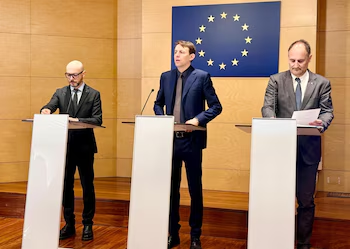
In a statement made following the presentation of a survey marking Spain’s 40 years of EU membership, López described the Israeli army’s actions as “unprecedented shameful.” His remarks highlight the gravity of the situation, indicating that the EU should have taken a firmer stance by suspending its association agreement with Israel. This agreement could serve as a crucial leverage tool in confronting Israel’s actions, particularly in light of the current humanitarian crisis unfolding in Gaza and Lebanon.
A Call for Clear Accountability
López emphasized the need for a cohesive and decisive approach from the EU, urging member states to unify their stance on human rights violations occurring in regions of conflict. He criticized the EU’s response as “divided and unclear,” pointing out that while some nations, including Spain, have expressed concern, a unified position is essential for effective advocacy on behalf of those affected by such actions.
Spain’s Role and Future Implications
Highlighting Spain’s support for a more robust response, López asserted that the nation’s voice remains a positive exception in an otherwise fragmented EU approach. The ongoing tensions in the Middle East demand a strong and responsive European policy. López’s call for action raises important questions about the EU’s commitment to human rights and its responsibility to protect vulnerable populations against aggressive state actions.
The Bigger Picture
The capture of Abukeshek and Ávila is emblematic of broader geopolitical tensions and raises critical ethical considerations about the EU’s role in foreign relations. As world events shape public discourse, the call for accountability and a reevaluation of diplomatic agreements could mark a turning point for the EU’s engagement in international human rights issues.
Conclusion
Javi López’s outspoken criticism sheds light on the urgent need for a coherent and proactive EU strategy in response to human rights concerns. As the EU grapples with internal divisions and external pressures, the call for action highlights the imperative for European leaders to prioritize human rights and take decisive steps towards ensuring accountability in conflict zones.