
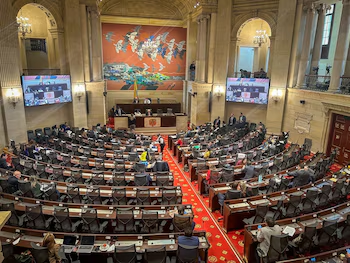
Current State of Congress Amid Presidential Elections
The Congress of the Republic is currently experiencing a significant slowdown in legislative activities, primarily due to the approaching presidential elections. This political climate has created hurdles for various initiatives that remain in limbo.
Legislative Quorum Issues
Reports indicate that sessions in the House of Representatives are progressing at a sluggish pace, with the Senate facing even more critical challenges. For over six sessions, the Senate has struggled to advance past the first agenda item, repeatedly failing to achieve the required quorum during initial debates.
Impact of Educational Proposals
One of the most affected initiatives is the school bonus proposal put forward by Senator Paloma Valencia from the Democratic Center. This project aims to create a system allowing underprivileged children and adolescents to select between public and private education institutions. Advocates argue that it promotes educational access, while those aligned with President Gustavo Petro label it as detrimental to the enhancement of public education.
Political Tensions and Blockages
The political landscape has seen a notable increase in tensions and confrontations, particularly between Senator Valencia and Senator Iván Cepeda. Such interactions have overshadowed formal debates, contributing to the legislative impasse.
Government Intervention and Responses
Amidst this environment, President Gustavo Petro has criticized the absences of congressional members and urged the Senate and Chamber leaders to report attendance patterns to pursue accountability. “The Government has sent messages of urgency regarding several projects that must proceed in line with established protocols,” Petro stated.
However, this call to action was immediately rebuffed by Senate President Lidio García, who emphasized that the Executive branch lacks authority over Congress’s internal controls. “Congress is an autonomous and independent part of public power, with attendance management strictly belonging to each Chamber,” García asserted.
Stalled Legislative Agenda
Beyond the school bonus, national government initiatives face a similar fate. Critical proposals, such as agrarian jurisdiction and competition law reforms, are at risk. If not addressed during the current legislative period, these initiatives could collapse entirely, considerably impacting the government’s agenda.
Future Reforms in Jeopardy
The Minister of the Interior, Armando Benedetti, called for disciplinary measures against absent members, sparking additional controversy as opposition voices question the government’s authority to intervene in congressional operations. Senator María Fernanda Cabal affirmed that internal organization remains a Constitutional matter.
Conclusion: A Legislative Standstill
The ongoing legislative stagnation poses a direct threat to key proposals, such as health reforms and agrarian jurisdiction changes. As the clock ticks down on the current congressional term, the lack of consensus and increasing polarization could result in significant setbacks for initiatives deemed essential for the government’s direction.