
Google’s Generative Models: Reconnecting People with Dementia to Their Past
Google’s generative models, particularly through the Gemini platform, are making a significant impact on the lives of individuals suffering from dementia, notably Alzheimer’s disease. These innovative tools are not only reshaping how we approach memory care but also providing new avenues for emotional engagement and personal connection.
The Synthetic Memories Project
One of the most striking initiatives is the Synthetic Memories project, spearheaded by Domestic Data Streamers. This groundbreaking endeavor targets individuals in the early stages of Alzheimer’s and other dementias. The primary goal is to visually reconstruct memories based on the oral narratives provided by the patients themselves.
Collaborating with organizations like the Fundació Catalunya La Pedrera, the project aims to enhance participants’ quality of life and emotional well-being. Through structured Memory Reinforcement programs, trained professionals work with participants, such as Manel, to help them maintain their abilities and autonomy as long as possible.
How Reminiscence Therapy Works
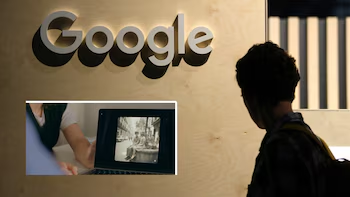
In reminiscence therapy sessions, patients articulate their memories verbally. Leveraging Gemini’s image-generative capabilities, these descriptions are transformed into visual representations, vividly depicting moments that might otherwise remain confined to the patient’s mind.
The process is straightforward yet powerful: patients can see the images on screens, validate their accuracy, and even print them for future cognitive and emotional stimulation sessions. For those like Manel experiencing progressive memory loss, these AI-generated images serve as anchors to their identity. They provide a tangible connection to the past, help preserve personal legacies, and foster a sense of recognition and continuity.
Empowering Independence
Beyond memory support for dementia patients, Google’s generative AI is also empowering individuals with other disabilities. Take, for example, Jonatan Armengol, Spain’s first blind food critic. In the past, Jonatan faced significant challenges in his day-to-day activities due to visual impairments. Today, he relies on Gemini Live, using his phone’s camera to navigate everyday tasks independently.
An example of this is the identification and comparison of pumping dates on breast milk bags for his baby. With a voice command, Gemini interprets Jonatan’s needs and delivers the necessary information, seamlessly facilitating his parental responsibilities.
Preserving Stories of Older Generations
AI’s ability to retain and highlight individual stories does not stop at memory assistance for dementia patients. The Lo Que De Verdad Importa Foundation runs an inspiring project named Your Story Really Matters. This initiative promotes intergenerational dialogue, where volunteers harness Gemini’s Deep Research capabilities to transform the lived experiences of older adults into cherished books.
Cristina, a notable volunteer, utilizes Gemini chat and deep research to meticulously organize and shape María’s biography. With AI handling the documentation, Cristina focuses on the essential aspects of the project: fostering human connections and sharing valuable life stories that enrich the community.
Conclusion: The Human Touch of AI
The combined efforts of these projects exemplify the profound impact of Google’s generative models on society. As articulated by Google, “These examples remind us that the true value of AI lies in its ability to make our lives a little easier and more human.” By bridging the gap between technology and emotional connection, these initiatives provide transformative support for individuals and families navigating the challenges of dementia, independence, and storytelling.