
The Myth of the 50-Lane Highway: Reality vs. Fiction
In the age of rapid population growth and urban development, the need for expansive highways has become paramount. While conventional wisdom might suggest that increasing the number of lanes on a highway is the key to reducing traffic congestion, the reality is often more complicated. One such misconception has popularized a supposed “50-lane highway” in China, which has since been debunked. The title of the real champion for the most lanes belongs to the Katy Freeway, part of the Interstate 10 in Houston, Texas.
The True Record Holder: Katy Freeway
Stretching 2,460 kilometers across the United States, Interstate 10 hosts the Katy Freeway—a section known for its impressive capacity. This stretch, approximately 37 kilometers west of downtown Houston, reaches a staggering total of 26 lanes at its widest point, specifically at Gessner Road. This includes 12 main lanes, 8 service lanes, and 6 dynamic toll lanes. It’s this significant expansion that has become a vital artery for mobility in one of the largest cities in the United States.
Understanding the Infrastructure
The Katy Freeway was initially constructed in the 1960s to accommodate a maximum of eight lanes, sufficient for its time. However, exponential urban growth in Houston during the 1980s and 1990s led to traffic levels that far outweighed its design capacity. By the year 2000, it was reported that the freeway experienced over 200,000 vehicles daily when it was only intended for 120,000. This increase resulted in severe congestion, prompting the need for a massive expansion project costing $2.8 billion, which took place between 2004 and 2008.
The Fallacy of Induced Demand
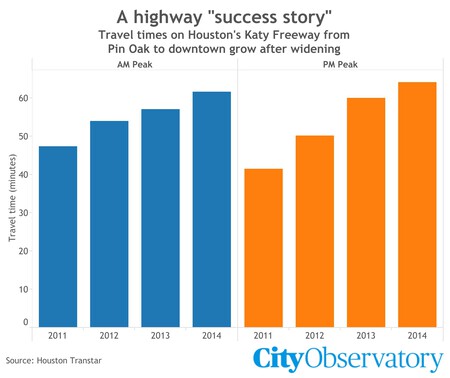
Interestingly, expanding highways often lead to increased traffic congestion, a phenomenon known as induced demand. After the expansion of the Katy Freeway, data indicated that travel times actually worsened. Reports showed incremental delays of up to 19 minutes during peak hours just two years after the widening, contradicting the belief that more lanes would alleviate congestion. Research has shown that new road capacity tends to attract more drivers and trips, quickly filling the available space.
A Closer Look at the Alleged 50-Lane Highway
The G4 Beijing-Hong Kong-Macao road has frequently been cited as a “50-lane highway.” However, this assertion is misleading. The reality is that the G4 highway generally consists of four lanes along its extensive 2,000-kilometer stretch. The illusion of numerous lanes arises only at the toll area near Zhuozhou, where capacity is temporarily increased for toll collection. This area expands to accommodate traffic but quickly returns to its standard lane configuration shortly after.
Conclusion: More Than Just Numbers
While the concept of highways expanding to accommodate more vehicles sounds appealing, the realities of urban planning suggest otherwise. The Katy Freeway exemplifies how larger highways can lead to greater congestion rather than relief. Additionally, the myth surrounding the “50-lane highway” only highlights the importance of critically evaluating such claims. The balance between infrastructure investment and effective urban planning remains critical for addressing the growing mobility challenges faced by cities worldwide.