
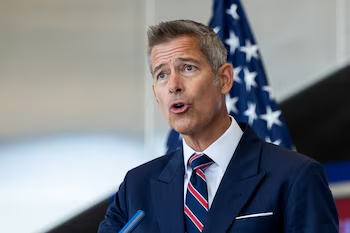
U.S. Transportation Secretary Rejects Bailout for Low-Cost Airlines
The recent announcement by U.S. Transportation Secretary Sean Duffy to deny a government bailout for low-cost airlines has sent ripples through the aviation industry, especially following the bankruptcy of Spirit Airlines. Duffy emphasized that the government should serve as a lender of last resort, noting that many companies still have access to funds in private markets.
The Call for Government Aid
A coalition of low-cost airlines, including Frontier and Avello, had petitioned the government for USD 2.5 billion to mitigate rising operational costs, particularly those related to increased fuel prices stemming from geopolitical tensions. The Association of Low Cost Airlines confirmed this appeal to the prior administration, seeking financial relief aimed at stabilizing their operations and maintaining affordable fares during an unpredictable market.
They also requested the temporary suspension of federal taxes, which significantly impact ticket pricing. Duffy, however, expressed that many airlines had seen the potential for government aid as an opportunity for fundraising rather than an absolute necessity.
Response from the Industry
The rejection of the bailout request sparked a fierce debate within the aviation sector. The trade group Airlines for America, representing major airlines, criticized the idea of public aid for their low-cost counterparts, claiming it could unfairly benefit airlines that had not implemented cost-management strategies. They argued that government intervention would create an uneven playing field.
Countering this, the low-cost airlines’ association defended their stance by highlighting that the spike in jet fuel prices was an external shock, not a reflection of poor management. They stated that these burdens disproportionately affect airlines focused on maintaining lower fares.
The Fallout from Spirit Airlines’ Bankruptcy
Spirit Airlines has faced significant turmoil, having already declared bankruptcy twice since the onset of the pandemic. The airline’s inability to secure additional financing led it to an orderly liquidation, effectively ceasing operations and canceling all flights.
This sudden closure caught both passengers and employees off guard, resulting in the loss of about 17,000 jobs. Spirit’s CEO, David Davis, conveyed the severity of their financial woes, stating that hundreds of millions in additional liquidity were required, funds that were ultimately out of reach.
Conclusion: What Lies Ahead
Duffy’s firm stance against government bailouts illustrates a shift in the federal approach to airline financial stability. Passengers who purchased tickets directly with Spirit Airlines will be able to seek refunds from a dedicated reserve fund. For those who booked through travel agencies, refunds will need to be coordinated with those intermediaries.
As the transportation landscape continues to evolve amid rising costs and market volatility, it will be crucial for airlines—particularly low-cost carriers—to navigate these challenges effectively without relying excessively on government support. The ongoing dialogue around subsidy practices will be pivotal in shaping the industry’s future.