
Jaén: Europe’s Rare Earth Oasis
The transition to renewable energy crucially depends on rare earth elements (REEs), essential components for technologies like electric vehicles and wind turbines. Yet, a significant challenge lies in the global monopoly of rare earth production held predominantly by China. As Europe seeks to break free from this dependency, initiatives such as the Critical Raw Materials Act have been rolled out, aiming for at least 10% of critical raw materials to originate from within its borders by 2030.
The Emergence of the Orión Project
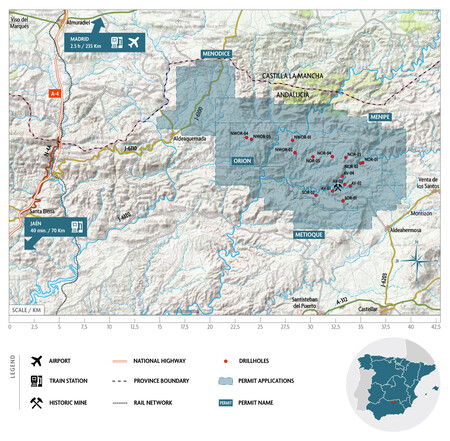
Enter Jaén, a region with a rich mining history, which has recently attracted attention thanks to the Osmond Resources. Since 2024, this Australian company has been exploring a critical mineral deposit in the Sierra Morena area, named the Orión project. Following the acquisition of a research permit from the Spanish government, Osmond’s explorations have rapidly evolved from a promising geological find to a strong contender for domestic rare earth production.
Highlights of Osmond’s Findings
In November 2025, Osmond reported significant discoveries in the “Menipe” area, revealing concentrations of valuable minerals. The survey indicated:
- 15.92% Titanium Dioxide
- 5.67% Zirconium Dioxide
- 1.15% Total Rare Earth Oxides
These findings highlight not only the presence of rare earth elements but also notable quantities of titanium and zircon, marking them as globally competitive materials.
Processing Potential vs. Market Demand
Four months subsequent to these revelations, validation from SGS Lakefield laboratories confirmed that processing monazite from the deposit can yield a whopping 19.4% total rare earth oxides. This value is noteworthy, as it includes critical components like neodymium and praseodymium, essential for producing magnets used in green technologies.
Broader Importance
The quality of the concentrate and the processing feasibility mark a significant milestone for Europe. Unlike many current European projects, which focus solely on extraction, the Orión project aims to manage the entire value chain, encompassing mining through to the separate production of oxides ready for industrial use. This strategic approach aligns perfectly with the goals set forth in the Critical Raw Materials Act, positioning the Orión project as a vital asset for Europe’s quest for technological sovereignty.
Historical Context and Future Potential
Jaén’s geological backdrop is bolstered by a rich mining history, particularly noted during the 19th and 20th centuries. Historically, regions like Linares-La Carolina were among Europe’s key lead extraction zones. With recent explorations, Jaén is riding the wave of renewed interest in its mineral wealth.
A Growing Network
Andalusia, which holds about 90% of Spain’s metal mining value, is becoming a hub of mining activity stimulated by new European legislation. The Orión project serves as a pioneer in a burgeoning ecosystem dedicated to sustainable mineral extraction.
Challenges Ahead
Despite the optimistic findings, the Orión project faces several hurdles. Currently, there is no official resource estimate, exploitation license, or approved environmental impact assessment. As it stands, the permit only allows for research, echoing past projects that faced social opposition and regulatory challenges.
Environmental Concerns: A key technical consideration involves the presence of thorium, a naturally occurring radioactive element found in monazite. Although technically manageable, it raises concerns that could hinder public acceptance of the project.
Conclusion
While the data from the Orión project showcases substantial potential, transitioning from exploration to operational mining will require careful navigation of social, regulatory, and environmental landscapes. The journey ahead may be challenging, but with strong foundational data and strategic partnerships, Jaén could indeed fulfill its promise as Europe’s next major supplier of rare earth elements.