
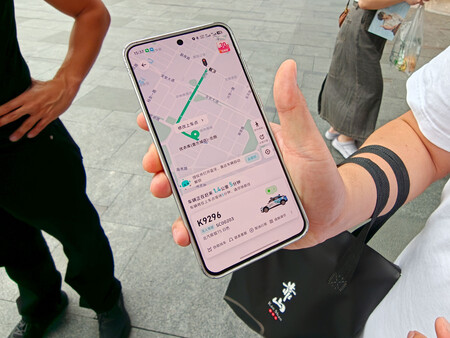
It’s hard to believe that just four decades ago Shenzhen was a fishing village. Today, vast avenues teem with autonomous taxis, while drones zip through the air, delivering bubble tea. This blend of technology and daily life is an ordinary Thursday in the heart of China’s innovation hub.
An Autonomous Taxi Ride through Shenzhen
During my visit to China for the launch of the OPPO Find X9 Ultra, my first destination was Shenzhen. As someone fascinated by the “low-altitude economy,” which includes drone deliveries, I was eager to experience this firsthand. I quickly sought out a way to place an order and decided to try out an autonomous taxi.
Shenzhen’s robotaxis, provided by Pony.ai, operate with level 4 autonomy—that means no driver is on board. However, I faced an initial hurdle: I needed a Chinese phone number. Fortunately, a travel agency employee with the PonyPilot+ app came to my rescue. My taxi arrived within five minutes, and I was on my way for a 30-minute ride.
These autonomous vehicles feature a transparent screen dividing the driver’s seat from passengers, equipped with cameras and necessary screens to monitor the journey. I fastened my seatbelt and hit “start ride.” Initially uncertain, I soon found the drive smooth, precise, and adept at navigating Shenzhen’s bustling traffic.
The robotaxi’s speed was cautious yet efficient, adhering to speed limits and maintaining safe distances. Unlike human drivers, it displayed no road rage; when cut off, it simply slowed down and adjusted its course.
The Flying Bubble Tea
My ride concluded at a Meituan delivery kiosk, part of one of China’s most popular delivery apps. I was initially concerned about utilizing the drone service due to the rain, but upon my arrival, I spotted a drone effortlessly navigating the park overhead, a cheerful yellow box in tow. Rain doesn’t affect the drone’s operation, though wind can cause disruptions.
Next to the kiosk, a sign offered a QR code for placing orders. Once again, a local’s assistance was needed to help navigate through WeChat, the predominant app for such services. I soon discovered that Meituan allows users to order virtually anything, from food to dental appointments.
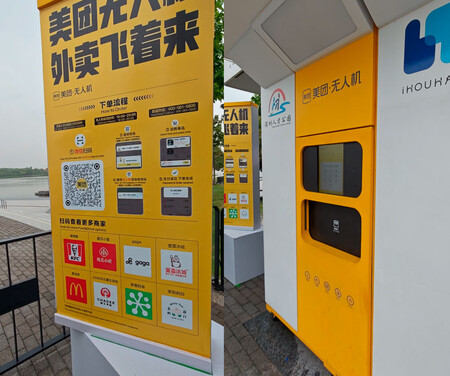
Interestingly, I found a queue of eager customers awaiting their drone deliveries. As I watched, the drones executed their tasks with millimeter precision, lowering their packages into the designated area without a hitch. After entering a four-digit pin, the kiosk opened, allowing me to collect my bubble tea.
All orders were neatly packaged in sturdy yellow and white boxes, requiring us to dismantle them afterward to recycle. Deliveries were consistent, taking about 25 minutes, although longer queues were expected during fairer weather.
Reality is Not So Futuristic (at the Moment)
While I envisioned Shenzhen as a city buzzing with delivery drones, the reality is different. These drones remain a novelty, mostly attracting tourists. Delivery personnel on bicycles and electric scooters still dominate the streets. The autonomous taxis I spotted were far outnumbered by traditional rideshare options like Didi.
This raises questions about the future of employment as automation becomes more prevalent. Though technology is advancing rapidly, logistical challenges mean that complete replacement of human workers in this sector won’t happen overnight.
In closing, my experience in Shenzhen was remarkable for its blend of futuristic technology and everyday life. I spent a total of 106 yuan (about €13.20) for my robotaxi ride and three bubble teas—an excellent showcase of how quickly technology has transformed daily routines.
Images | Amparo Babiloni, Xataka