
The Crucial Role of Wheat in Civilization
The history of wheat is the history of civilization. This cereal is intricately linked to humanity’s transition from Paleolithic to Neolithic societies around 8,500 BC. Wheat, often seen as synonymous with life, has also become a source of significant health challenges, posing risks of dire consequences for some individuals.
The Hongerwinter: A Dark Chapter in Dutch History
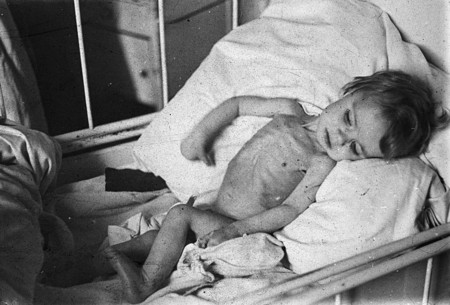
In 1944, during World War II, the Nazi occupation led to a horrific famine in Holland, commonly referred to as the Hongerwinter or “hunger winter.” The Wermacht, frustrated with local rebellions, imposed a food transportation embargo, resulting in rationing that offered as little as 580 kilocalories per adult per day. Survivors still recall this traumatic period, highlighting its impact on their lives.
Foraging for Survival
With food in extreme scarcity, the Dutch populace resorted to consuming anything they could find, including tulips, despite their high toxicity and negligible energy value. While this diet was disastrous for most, it sparked an unexpected turn of events for the patients at Juliana Children’s Hospital in The Hague, where a different story unfolded.
Discovering Celiac Disease
Pediatrician Willem Karel Dicke observed that many malnourished children in his care began to improve during this famine. Infants, who were typically at high risk during such dire times, displayed unexpected recovery signs, including healthy weight gain and improved skin conditions. This marked a significant observation, as before the hunger winter, one in three children with suspected celiac disease perished.
Through subsequent research, Dicke identified that the symptoms linked to celiac disease were primarily triggered by wheat and rye flour. His groundbreaking conclusions, published in 1950, reshaped the understanding of this chronic condition, illuminating the relationship between gluten consumption and detrimental health effects.
The Lasting Legacy of Dr. Dicke’s Research
Dr. Dicke’s findings earned him a nomination for the Nobel Prize in 1962, tragically passing away just weeks before the award ceremony, missing an opportunity to cement his legacy. Celiac disease remains a complex condition to diagnose, often confused with other digestive disorders. Modern studies continue to discover its far-reaching effects, leading to discussions about its correlation with conditions such as autism, Parkinson’s, and depression.
The Evolving Understanding of Celiac Disease
Despite being recognized since the 1950s, the diagnosis rate of celiac disease might be significantly lower than the actual prevalence. Current estimates suggest that between 1% and 2% of people in developed countries have celiac disease, with epidemiological studies indicating it may be ten times more common than diagnosed. The condition’s frequency is increasing, reflecting a growth trend of 15% each year in some populations.