
What if much of the software we use every day was already beginning to be written in a different way? AI has been entering programming for some time through the door of assistants, code suggestions, and small automation, but what is beginning to be seen now goes much further. The question is no longer just whether these systems help to write faster, but what happens when a large technology company decides to rely on them systematically. Google has given a pretty clear clue as to where that transition is going.
Google’s Leap into AI-Generated Code
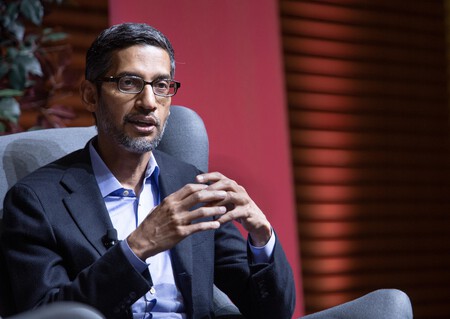
Google’s jump. The figure was put on the table by Sundar Pichai in a blog post linked to Cloud Next 2026. According to Google’s CEO, the company has been using AI to generate code internally for some time, and today, 75% of all new code is already generated by AI and approved by engineers. This jump is significant: last fall, that percentage was only 50%. Google has quickly transitioned to placing AI at the heart of much of its software production.
The Importance of Human Oversight
Precision matters. That nuance is not minor: generated by AI does not mean accepted without human control. Pichai emphasizes code generated by these systems is also approved by engineers, highlighting a necessary difference to avoid overstating the data. Richard Seroter, Senior Director at Google Cloud, noted that this human approval is “fundamental in this area.” Google’s stance is that while AI can handle an increasing portion of production, it must operate within a process where engineers continue to validate, correct, and make decisions.
Empowering Engineers with AI
Google’s internal turn. Pichai presents this advancement not merely as a productivity improvement but as part of a shift towards “truly agentive” workflows. Google engineers are now orchestrating autonomous digital teams, launching agents to complete tasks that previously depended much more on direct human work. For perspective, a complex code migration performed by agents and engineers was completed six times faster than a year ago with engineers working solo.
The Evolving Role of Programmers
The engineer changes places. Google’s thesis isn’t that programmers will disappear but that their roles will transform. Seroter explained that, with this new distribution of tasks, engineers can focus on higher-value tasks: system architecture, design, and complex problem-solving. In this new framework, manual code writing loses significance, while the ability to oversee, review, and convert code into real products gains importance.
The Wider Industry Context
The contrast with the rest of the sector. A Sonar survey earlier this year found that 96% of developers do not fully trust AI-generated code, with 52% admitting they do not always review it for errors before integration. Simultaneously, the prevalence of these AI tools is rising rapidly: the share of AI-generated code has surged from 6% in 2023 to 42% in the latest report, with a forecast of 65% by 2027. This indicates that while adoption of these tools is accelerating, trust is lagging behind.
In conclusion, as AI increasingly plays a crucial role in software development, the relationship between human oversight and machine generation will continue evolving. Emphasizing collaboration will be key to ensuring that AI-generated code meets the high standards necessary for modern software reliability and security.