
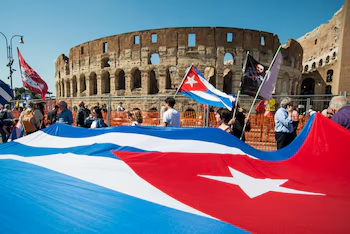
Cuba Asserts Sovereignty Amidst US Fuel Blockade
The Cuban Foreign Ministry has firmly declared its intention “not to renounce its sovereign right to build its own development model.” This statement comes in the wake of the United States’ ongoing energy blockade against the island, which various Cuban officials have criticized as a direct threat to the country’s sovereignty and well-being.
Diplomatic Stance at UNESCO
During a recent meeting of the UNESCO Executive Council in Paris, Dulce María Buergo Rodríguez, the head of the Cuban National Commission of UNESCO, reiterated Cuba’s commitment to its sovereignty. She condemned the U.S. actions as “threats of military aggression” and emphasized the detrimental impact of what she referred to as a “total siege” on fuel supplies. According to Buergo, the measures imposed by the U.S. government are not only unjust but also violate international norms.
“Added to this is the arbitrary inclusion of Cuba in the unilateral list of States that supposedly sponsor terrorism,” Buergo stated. She highlighted how the U.S. executive orders aim to impose additional restrictions under false pretexts, which she argues have been designed to instigate economic deprivation that could force the Cuban people to abandon their national sovereignty.
The Cuban Perspective on Sovereignty
Buergo emphasized the importance of maintaining Cuban sovereignty. This stance is crucial not only for citizens’ prosperity but also for Cuba’s role in promoting a more peaceful world. The Cuban government is determined to create a society that reflects its citizens’ aspirations, independent of external pressures.
The diplomatic assertions align with remarks made by President Miguel Díaz-Canel, who has advocated for dialogue with the United States under conditions that respect Cuba’s sovereignty. He has called for negotiations devoid of coercive tactics, underlining Cuba’s desire for constructive discussions.
The Context of the US Blockade
The U.S. fuel blockade is part of a wider strategy that includes tariffs and sanctions, first instituted under the Trump administration. These policies have been portrayed as a pressure tactic aimed at fomenting dissent within the Cuban population. Moreover, the historical context of U.S. military intervention in countries like Venezuela brings additional complexity to the situation. Buergo pointed to the severe consequences of American interventions, which have already cost numerous lives and have sowed instability in the region.
Conclusion: The Resilience of Cubans
Cuba’s recent statements at UNESCO reveal a nation steadfast in its resolve to preserve its sovereignty, even in the face of external threats. By asserting its rights on international platforms, Cuba seeks to garner support and understanding from the global community while developing a sustainable future independently. The struggle against the fuel blockade symbolizes not just a fight for resources, but a broader battle for self-determination and dignity.