
Lufthansa Cancels 20,000 Flights: A Strategic Move Amid Rising Fuel Prices
Overview of Flight Cancellations
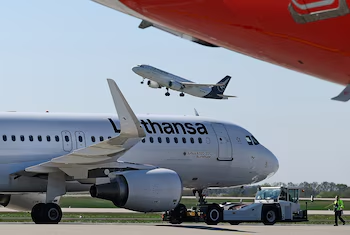
The Lufthansa airline group has announced its decision to cancel approximately 20,000 short-distance flights until October. This measure aims to save around 40,000 tons of kerosene, driven by a dramatic increase in fuel prices, which have effectively doubled since the onset of the war in Iran on February 28. Lufthansa confirmed that this cut would represent a 1% decrease in passenger transport capacity for the summer season.
Affected Routes and Strategic Adjustments
The bulk of the cancelled routes belongs to Lufthansa’s regional subsidiary, Cityline, which will stop operating entirely during this period. The most affected areas are “unprofitable” routes originating from Frankfurt and Munich airports. Notable cancellations include flights from Frankfurt to Bydgoszcz and Rzeszów in Poland, as well as flights to Stavanger in Norway.
Despite these cancellations, Lufthansa is looking to optimize its operations by expanding routes in Zurich, Vienna, and Brussels. The group, which includes Austrian Airlines, Swiss, Brussels Airlines, Eurowings, and ITA Airways, assures customers that fuel supplies will be secured for the upcoming weeks, and they hope to maintain the existing flight schedules for the summer.
Future Plans and Route Management
As of the end of May, Lufthansa will implement 120 additional flight cancellations and has already started notifying affected passengers. The airline intends to review its medium-term route planning, with further updates on their flight network expected in late April or early May.
European Union’s Position on Flight Cancellations
Lufthansa’s announcements follow comments from Apostolos Tzitzikostas, the European Commissioner for Sustainable Transport and Tourism. He indicated that no mass cancellations are anticipated this summer across the European Union, despite the rising kerosene prices. Addressing the situation, he noted that the market is currently managing the pressure resulting from the Strait of Hormuz closure, with no immediate signs of shortages.
Tzitzikostas cautioned, however, that the circumstances could evolve unfavorably without a diplomatic resolution regarding the Hormuz blockade, which could lead to catastrophic consequences. The EU refines 70% of its kerosene domestically and imports half from the Persian Gulf, maintaining strategic reserves for potential emergencies.
Insights from Industry Associations
The Association of Airlines (ALA) has dismissed the possibility of widespread cancellations due to supply issues. Javier Gándara, president of the ALA, stated that the airline supply remains guaranteed and that recent flight adjustments are driven by business strategies rather than fuel limitations. He added that airlines could raise ticket prices, reflecting their operational autonomy in response to market conditions.
Meanwhile, Spanish airlines have expanded their offerings by 6% for the high season, providing nearly 260 million available seats between April and October. This expansion responds to increasing tourist interest and the need to absorb traffic that might otherwise be diverted from conflict-affected regions.
Conclusion
Lufthansa’s decision to cancel thousands of flights is a proactive approach to adapt to fluctuating fuel prices instigated by geopolitical conflicts. While certain routes will be suspended, the airline is simultaneously looking to capitalize on other opportunities. As the landscape evolves, both consumers and industry players must remain vigilant and informed.