
Archaeological Discovery at Al-Bahansa
The ancient Egyptian soil continues to unveil its secrets, as a recent archaeological expedition at the Al-Bahansa necropolis reveals remarkable finds. Situated approximately 200 kilometers from Cairo, this site, dating back to the Roman era, has produced not just mummies and vessels but also a fragment of one of the world’s literary masterpieces—the ‘Iliad.’
The Significance of the Discovery
The Egyptian Ministry of Tourism and Antiquities announced these findings with great enthusiasm, emphasizing their cultural importance. Led by archaeologists Maite Mascort and Esther Ponce, the ongoing excavation has shed light on funerary practices and the diverse cultural influences present during the Ptolemaic and Roman periods.
Unearthing the ‘Iliad’
In a surprising twist, one of the mummies contained a papyrus fragment from Homer’s ‘Iliad,’ specifically a passage known as the ‘Catalogue of Ships’. This excerpt details aspects of the Achaean forces involved in the Trojan War, lending historical depth to the burial practices exhibited at the site.
Extraordinary Findings in the Tombs
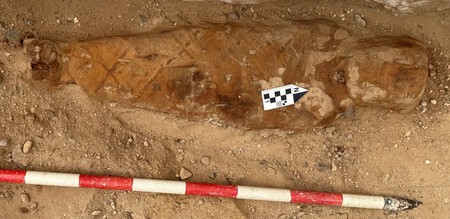
The archaeological team also discovered richly adorned Roman mummies, wrapped meticulously in linen decorated with intricate geometric patterns. The craftsmanship extended to polychrome wooden coffins and even fragments of gold leaf attached to the corpses, suggesting a sophisticated aesthetic sensibility in funerary rituals.
Additional Burial Artifacts
Moving beyond literary treasures, the excavation revealed other intriguing items, including three gold tongues and one made of copper. These artifacts, likely mortuary amulets, were originally placed within the mouths of the deceased, believed to aid their transition into the afterlife.
Historical Context and Importance
This discovery is crucial for two main reasons: it highlights the immense cultural wealth accumulated within Egyptian civilization across different epochs and provides insights into the funerary practices during Greek and Roman times at Al-Bahansa. Archaeology Director Sharif Fathi remarked on how these revelations confirm the diverse influences and richness of Egypt’s historical landscape.
Exploration of Funerary Practices
In further investigations, the team examined tomb No. 67, which dates back to the Ptolemaic period. They uncovered three limestone chambers, containing various historical treasures, including a vessel with charred remains thought to belong to an adult, the bones of a baby, and the head of a feline, all carefully wrapped in textiles.
Religious Figurines and Symbolism
Additional findings included remains of cremated individuals and figurines representing deities, such as Harpocrates and Cupid. These artifacts not only enhance our understanding of the art and religious beliefs of the time but also symbolize the rich tapestry of life and death in ancient Egypt.
Conclusion
The discoveries at Al-Bahansa serve as a reminder of Egypt’s deep historical significance and the ongoing fascination with its past. Each find, from the ‘Iliad’ fragment to the elaborate tomb goods, continues to enrich our understanding of this ancient civilization, ensuring that its stories endure through the ages.
For more updates on these archaeological findings, follow the Egyptian Ministry of Tourism and Antiquities.