
Iranian Regime Delays Dialogue with the U.S. Amid Port Blockades
Diplomatic Tensions and Accusations
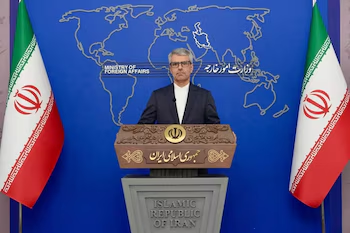
The Iranian regime has recently accused the United States of “not being serious” regarding their willingness to engage in dialogue. Spokesperson for the Iranian Foreign Ministry, Esmaeil Baqaei, cited violations of a ceasefire that has been in effect since April 8. Baqaei pointed to a U.S. attack on an Iranian cargo ship, ongoing naval blockades on Iranian ports, and delays in the ceasefire implementation in Lebanon as fundamental violations that undermine the credibility of U.S. diplomatic efforts.
Impact of Naval Blockades
The naval blockade affecting Iranian ports has raised significant concerns in Tehran. Baqaei stated, “Tehran has no plans for a new round of negotiations,” highlighting the regime’s hesitance to participate in discussions while feeling threatened by U.S. military actions. The heightened tensions have been exacerbated since a war began following attacks that resulted in the death of Iran’s Supreme Leader, Ayatollah Ali Khamenei, on February 28.
U.S. Response and Diplomatic Developments
Despite these tensions, U.S. President Donald Trump announced that he has sent a negotiating team to Islamabad for discussions regarding Iran. However, Tehran has not confirmed participation in these talks. The specter of failed previous negotiations looms large, with both parties having conducted indirect contacts that ultimately yielded no results.
Baqaei stressed that the Iranian negotiating team needs to operate with “vigilance and absolute precision,” given what he characterized as the U.S.’s insistence on “unrealistic positions.” This sentiment underscores the lack of trust between the two nations, with Iran accusing Washington of betraying diplomatic norms.
Key Issues at Stake
Critical friction points include the ongoing situation concerning highly enriched uranium and the Strait of Hormuz. The spokesperson specifically stated that discussions around transferring enriched uranium to the U.S. had never been raised during negotiations. He reaffirmed that the U.S. blockade and the recent attacks on Iranian ships are seen as acts of aggression.
Moreover, Israeli actions against Lebanon during the ceasefire have also been cited as examples of breaches of commitments, further complicating the diplomatic landscape.
Upcoming Dialogue in Pakistan
As the situation remains fluid, U.S. Vice President J.D. Vance is set to lead a high-level delegation to Pakistan for another round of talks with Iran. The timing is particularly poignant, as tensions in the Strait of Hormuz rise and the ceasefire expiration looms on the horizon.
The White House confirmed Vance’s involvement along with special envoy Steve Witkoff and advisor Jared Kushner, correcting earlier reports that indicated Vance would not attend due to security concerns. Trump’s endorsement of Vance as “great” in talks emphasizes the administration’s commitment to finding a resolution in this tumultuous context.
Conclusion: A Complex Web of Diplomacy
The Iranian regime’s decision to delay dialogue stems from a web of accusations and tensions that underscore a grave mistrust in U.S. intentions. As both nations prepare for potential discussions in Pakistan, the stakes remain high, with major implications for regional stability and the broader international community.