
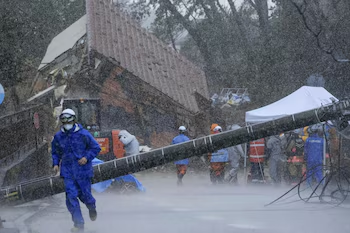
Magnitude 7.4 Earthquake in Japan Activates Tsunami Alert
A magnitude 7.4 earthquake struck northern Japan on Monday, sending shockwaves throughout the Pacific region. The tremor, which occurred at 16:53 local time (07:53 GMT) offshore from Iwate Prefecture, prompted the Japan Meteorological Agency (JMA) to activate emergency protocols due to the risk of tsunami waves reaching heights of up to three meters.
Immediate Response from Officials
Following the quake, officials urged residents in coastal and riverine areas to evacuate to safer locations. The JMA’s warning stressed the urgency of the situation, advising people to remain in safe areas until further notice: “Tsunami waves are expected to hit the area repeatedly.”
This system of quick alerts is a testament to Japan’s advanced seismic response capabilities, developed over decades of experience with earthquakes. Images from the national broadcaster NHK showed immediate emergency mobilization, with sirens blaring and evacuation orders issued.
Reports of Damage and Safety Precautions
The earthquake’s intensity was felt as far away as Tokyo, where skyscrapers swayed for several seconds, alarming residents. Although initial reports indicated no immediate visible damage, the situation remains fluid as authorities continue to assess the impact.
Global Monitoring and Concerns
While Japan focused on its immediate response, other countries like Peru closely monitored the unfolding situation, especially regarding the potential for tsunamis along their coasts. The Hydrography of Peru assured the public shortly thereafter that there was no danger stemming from the earthquake, noting a separate but minor earthquake recorded in Tonga that day, which also did not pose a tsunami threat.
Historical Context and Preparedness
Japan’s geographical location within the Pacific Ring of Fire subjects it to frequent seismic activity, accounting for nearly 18% of global earthquakes. The recent earthquake has inevitably revived memories of the 2011 disaster, where a 9.0 magnitude quake triggered catastrophic tsunamis and resulted in approximately 18,500 dead or missing.
In the years since, Japan has strengthened its infrastructure and emergency responses considerably, demonstrating a commitment to minimizing loss of life and damage in the face of such natural disasters. The establishment of a special crisis management team by Prime Minister Sanae Takaichi showcases the nation’s proactive stance on disaster risk management.
Conclusion
As Japan and neighboring nations brace for any repercussions from this recent quake, the resilience and preparedness of Japan’s emergency services shine, reaffirming its readiness for natural disasters. The global community remains vigilant, ready to respond to any developments while recognizing the gravity of seismic events in this seismically active region.