
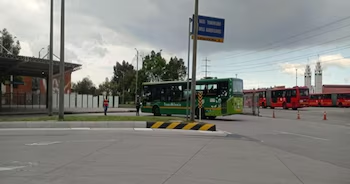
Calle 80 Corridor: A Critical Mobility Junction
The mobility of thousands of users traveling daily between Bogotá and the municipalities of the Western Sabana, such as Subachoque, El Rosal, and Facatativá, is reaching a pivotal moment. Concerns have surged regarding the potential relocation of intermunicipal bus fleets that currently operate along the 80th Street corridor. This proposed change has alarmed municipal authorities, transportation companies, and everyday commuters alike.
Potential Fare Increases
Municipal leaders, particularly those from Subachoque, El Rosal, and Facatativá, warn that moving operations to the Salitre Terminal could trigger a fare increase of up to 40%. This increment would stack atop a previous adjustment of 17% already implemented in January 2026. Such hikes would place a substantial financial burden on regular commuters who heavily rely on the fare and logistical integration provided by Portal 80 and the TransMilenio system.
Local authorities express additional concerns that the disconnection from the SITP (Integrated Public Transport System) could introduce greater risks of insecurity and congestion, further complicating the already strained transit system.
The Importance of the 80th Street Corridor
The Calle 80 corridor is essential for regional connectivity, facilitating intermunicipal services to regions as varied as Cota, Chía, Mosquera, and Funza. Certain routes have dedicated stops along Calle 80, which do not enter Portal 80 during peak hours, highlighting the mix of operational services in this corridor.
Challenges of Congestion and Safety
Congestion remains a major issue affecting both commuters and local traffic. Traveling just seven kilometers into or out of Bogotá can consume up to two hours during peak traffic, exacerbated by insufficient road infrastructure and improper parking practices by intermunicipal buses. The situation is so severe that parked buses often occupy significant portions of the road, creating further delays.
The District Mobility Secretariat acknowledges that Portal 80 has a maximum capacity of only 54 intermunicipal vehicles per hour. However, the actual traffic often exceeds 100 vehicles per hour, which leads to severe overload, operational chaos, and increased risks of accidents.
Collaboration and Future Actions
In light of these challenges, several working groups consisting of transportation companies and municipal authorities have convened to explore possible solutions aimed at alleviating congestion and enhancing safety at bus stops. A critical meeting is scheduled, where temporary actions will be discussed to mitigate the current crisis.
The Mobility Secretariat has not yet finalized specific measures to address these issues, emphasizing that all steps will require administrative regulations informed by these collaborative discussions.
Concerns Regarding User Safety
Transportation companies warn that if operations are fully moved outside Portal 80, users will face the discomfort of transferring at street stops, increasing their vulnerability to potential safety hazards. Additionally, access to integrated TransMilenio routes may become more challenging, complicating an already tense commute.
The complexities affecting the 80th Street corridor underscore the necessity for effective management and coordination between Bogotá and surrounding municipalities to regulate proper parking, maintain safe bus operations, and significantly cut down transit congestion. As authorities pursue viable solutions, the repercussions of any decisions will profoundly affect both users and the broader transport network.