
## Transforming Degraded Lands into Tourist Paradises
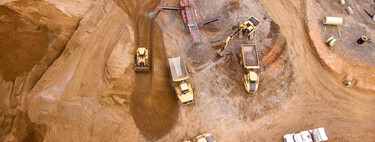
The energy transition in Germany is not just about moving away from fossil fuels; it also involves revitalizing degraded landscapes left by years of mining activities. One notable example is the Lusatian Lake District, which is undergoing one of the largest landscape transformations in Europe. This innovative project is turning abandoned coal mines into a stunning network of interconnected artificial lakes, paving the way for new tourism opportunities.
### The Lusatian Lake District Project
Located between Berlin and Dresden, the Lusatian Lake District spans over 13,600 hectares and consists of 23 artificial lakes, with ten connected by navigable canals. This transformation involves converting open-pit lignite mines into a serene vacation destination, complete with sailing, cycling, and camping opportunities. Early investments are significant, with costs estimated between 200 and 600 million euros to create each long-term lake environment. The total project investment has reached 7 billion euros, emphasizing the financial commitment required for such an extensive endeavor.
### The Significance of the Restoration Efforts
As the largest post-mining environmental restoration effort in Europe, the Lusatian Lake District serves as a critical case study for rehabilitating degraded areas. According to the German Federal Environment Agency, 19 of the lakes have already achieved a good ecological status, demonstrating that recovery is feasible. Beyond ecological improvements, these lakes play vital roles in water management, having released over 62 million cubic meters of water in 2018 to support local rivers during droughts.
The economic implications are also promising. The German government has allocated 40 billion euros to facilitate the transition from traditional coal mining to sustainable tourism and environmental restoration.
### A Brief Historical Context
During the era of the German Democratic Republic, over 2 billion tons of lignite were mined, leaving extensive craters across Lusatia. The region was once a cornerstone of energy production in Germany, peaking in lignite output in 1989. However, the reunification of Germany marked a turning point. The decline in energy demand led to a significant reduction in lignite mining, and by the 1990s, the LMBV (Lausitzer und Mitteldeutsche Bergbau-Verwaltungsgesellschaft) was tasked with restoring numerous open-pit mining sites.
### Technical Rehabilitation Challenges
Rehabilitating the Lusatian landscape involves intricate geotechnical stabilization and hydrological management. Advanced techniques, such as deep vibration compaction, are employed to transform mining craters into safe lakes. Additionally, active monitoring of ground movements through satellite technology ensures the project’s success.
Water chemistry presents another challenge, particularly due to the acidification caused by pyrite oxidation. To counteract this, treatment facilities and specialized vessels are used to maintain water quality standards.
### Financial and Ecological Hurdles
Although the project has seen significant investment, there are ongoing financial implications. While around 7 billion euros have been invested thus far, the total estimated cost could rise to 13.8 billion euros. Although the project is expected to conclude by the end of this decade, continuous monitoring and maintenance will be necessary for generations to come.
Despite the endeavor’s ambition, challenges remain. Recent assessments indicated that 12 of 36 lakes evaluated showed moderate water quality due to contaminants. Full ecological restoration is complicated but remains a primary objective in this transformative project.
### Conclusion
Germany’s initiative to convert old mines into lakes exemplifies innovative thinking and environmental stewardship. By addressing the dual challenges of energy transition and landscape rehabilitation, the Lusatian Lake District redefines the future of tourism and ecological recovery in the region.