
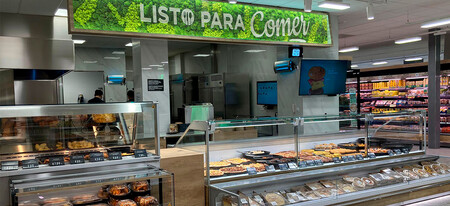
Mercadona’s Dominance in Spain
Mercadona has solidified its status as a leader in the Spanish distribution sector, boasting a substantial 27% market share nationwide. However, this dominance isn’t equally reflected across all regions of Spain. For instance, in Levante, the chain’s share skyrockets to almost 34%, while in the northwest, it lingers at only 18.2%—a mere three points ahead of its closest competitor, Eroski.
The Landscape of Competition
The present scenario suggests that there is significant room for Mercadona to expand, particularly in areas defined by the Duero River. Although the Valencian chain has strategically maneuvered to capture a nearly 30% share, competition remains fierce, particularly from regional firms thriving in the ultra-low-cost sector.
Regional Insights: Levante vs. Northwest
Mercadona’s market positioning is particularly robust in Levante, where its share exceeds 33.6%, notably outperforming competitors like Consum, at 16.8%. This success starkly contrasts with its performance in the northwest, where it holds only 18.22%—well below its competitors, including Eroski at 15.1%.
Factors Affecting Market Shares
Several factors contribute to these discrepancies. Price, product variety, and even regional loyalty play significant roles in consumer decisions. Notably, while Mercadona has made strides in growing its overall footprint, areas like Cantabria and Navarra reveal that its competitive edge is less emphatic. The Cantabrian coast showcases similar trends, where Mercadona holds 19.1%, closely followed by Eroski.
The Northern Redoubt: Opportunities and Challenges
The north of Spain, particularly the Cantabrian region, is an intriguing market. Despite maintaining a leadership position, Mercadona’s grip is shaky, often overlapping with Eroski’s territory and falling short in market shares compared to other regions like Levante. With a mere one-percentage point advantage over Eroski, Mercadona’s place is vulnerable, particularly in territories like Galicia and Asturias.
Path Forward: The Call for Expansion
For Mercadona, the focus must now shift to strategic growth in these northern territories. Unlike its swift success in regions where it initially established itself, such as the Valencian Community, the northern market presents unique challenges. The relatively recent foray into places like Vigo—where it only opened two stores as of mid-2013—highlights the path ahead.
The Competitive Edge
Mercadona’s strength lies in its ability to thrive in these diverse environments without needing a vast number of outlets. For instance, in the Valencian Community, it commands 23.2% of retail space yet manages to attain a 33.6% sales share—indicating operational efficiency and consumer loyalty amidst fierce competition.
Conclusion: A Balancing Act
As Mercadona navigates this landscape, strategic initiatives toward building loyalty and enhancing product offerings will be vital. Continuing to champion short assortments and ready-to-eat meals is essential, but it will also need to contend with strong regional counterparts. The future will hinge on its ability to balance growth while sustaining its reputation for quality and value across diverse consumer bases in Spain.