
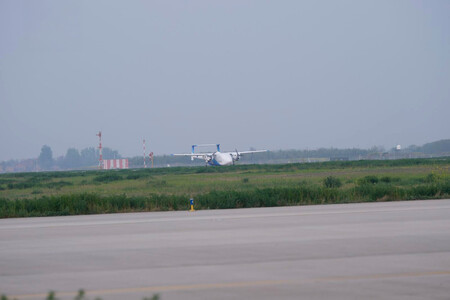
China has just put into the air one of those machines that, by concept and ambition, do not go unnoticed. It is not a new fighter like the J-35A, but rather a commercial unmanned aerial system for transport. The vehicle completed its first test flight on April 15. While a logistics network is yet to be deployed, the initiative highlights China’s aspirations in pilotless air transport, especially within its commitment to the emerging low-altitude economy.
First Flight
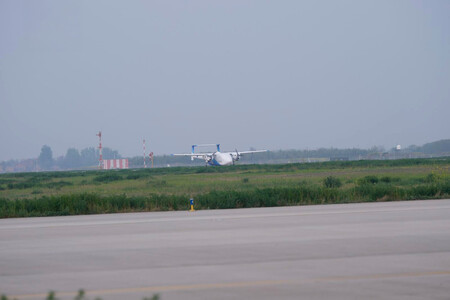
After a comprehensive development phase, the program has successfully transitioned from concept to reality. CCTV reports that the inaugural test occurred in Pucheng, Shaanxi, lasting for 22 minutes. Key operations of the onboard systems functioned properly, and the device showcased stable performance throughout the flight. This marks the first genuine flight evaluation, successfully completed with all systems operational.
The Figures of the Device
With successful tests in place, it’s essential to delve into the specifications of this Chinese flying truck. The HH-200 features a square section fuselage, high wings, dual engines, and a twin-boom design. It measures 12.2 meters in length, 16.8 meters in wingspan, and stands 3.7 meters tall. Operationally, it boasts a remarkable maximum load capacity of 1.5 tons and can cover a range of 2,360 kilometers. The aircraft can achieve a maximum cruising speed of 310 kilometers per hour.
The Logistics Part
Beyond its impressive dimensions, one of the crucial aspects of the HH-200 is its operational planning, both on the ground and in the air. According to China News, this system adheres to civil aviation standards and is designed for complete autonomous operation, guided by advanced AI for obstacle avoidance. It features a streamlined fuselage and a rear configuration that simplifies loading operations, enabling two operators to load or unload in just five minutes using pallets, loading platforms, and conventional forklifts.
Where Do You Want to Operate?
The HH-200 is engineered to perform under a wide variety of conditions. It can handle intricate missions not just on clear runways but also on short takeoff and landing strips, adapted for high-altitude airports, and can endure extreme temperatures and adverse weather. China News also indicates potential cargo routes in coastal and border areas, as well as logistics paths within cities and operations between Southeast Asian islands. Further applications may include emergency response, remote sensing, and agricultural or forestry tasks.
From Trial to Market
Following this pivotal milestone, the next phase will consist of extended testing rather than immediate implementation. Continuous flight tests are anticipated before the vehicle becomes operational—a critical distinction that emphasizes the difference between initial technical achievements and true operational readiness. Despite this, reports suggest that the project has already attracted 20 expressions of interest and indicates potential collaboration with various firms. The coming months will reveal whether we will see the HH-200 transition from testing to service.
Images | CCTV
In Xataka | Boeing has surpassed Airbus after years behind. That doesn’t mean I’ve regained control.