
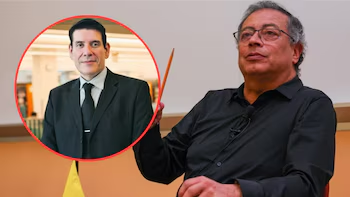
Mauricio Gaona Questions Petro’s Authority Over Mayors
Constitutional lawyer Mauricio Gaona has recently taken a firm stance against President Gustavo Petro’s controversial statements regarding the potential dismissal of mayors. Gaona’s comments come at a time when public discontent is simmering amid strikes in various regions over issues such as increased property taxes.
The Importance of Local Autonomy
Gaona asserted that elected local leaders are accountable to their constituents, not to the national government. He emphasized that any punitive measures against mayors should strictly adhere to legal processes, reinforcing the principle that “the mandate of a popularly elected official belongs to the voters, not to the Government.”
This clarification is particularly pertinent given the current political climate, where executive authority is being scrutinized against the backdrop of territorial autonomy. Gaona’s arguments highlight a critical debate over the limits and interplay of different branches of government in Colombia.
Petro’s Controversial Remarks
The controversy erupted following President Petro’s assertions that mayors who fail to comply with his directives could be removed. “Mayors who do not present the agreement initiatives, disturb public order and immediately leave their position by my order,” he stated. He compounded this with comments about potential imprisonment of non-compliant mayors, stirring considerable backlash from local leaders and associations.
Local unions quickly condemned these remarks, interpreting them as an overreach of executive power. Such sentiments echo the concerns articulated by Gaona regarding the need for checks and balances within the government structure.
Constitutional Processes for Dismissal
In his discourse, Gaona stressed that the Constitution of Colombia lays out explicit procedures for the removal of locally elected officials. Any actions taken against mayors should involve judicial oversight and due process. He remarked, “Its revocation reveals the applicable system. The dictatorship abides by the will of the ruler; democracy, due process and a judicial ruling,” pointing to the potential risks of misinterpreting presidential authority.
This insistence on due process highlights a crucial aspect of democratic governance—local authorities must feel empowered to operate independently, ensuring that their autonomy does not come under threat from higher political grounds.
Political Context and Further Implications
The political discourse surrounding Petro’s comments has ignited a broader discussion on territorial autonomy and the limits of presidential power. Local leaders from organizations like Asocapitales have reiterated that they possess legitimate authority to govern, and any claims of misconduct should be addressed through the appropriate judicial and disciplinary channels rather than threats or public statements.
Given the ongoing tensions resulting from public protests, this debate is likely to intensify, compelling various political entities to clarify the boundaries of executive power in relation to local governance.
Conclusion
In summary, Mauricio Gaona’s objections to President Gustavo Petro’s threats against mayors underline the fundamental principles of democracy and local governance. The ongoing debate about territorial autonomy and the limits of presidential authority will remain pertinent, especially as Colombia navigates its political landscape amidst various socio-economic challenges.