
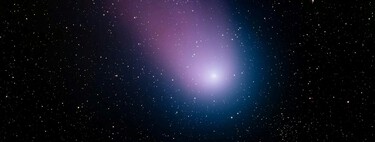
A Celestial Event Awaits: Comet C/2025 R3
In April, astronomy enthusiasts can look forward not only to the annual Lyrid meteor shower but also to a rare opportunity to observe comet C/2025 R3. This comet last graced our inner solar system 170,000 years ago, making its upcoming appearance especially significant.
Prepare to Observe
Although C/2025 R3 has already been visible, it currently requires binoculars or small telescopes for observation. Expectations are high for its visibility to improve after April 19, its perihelion, when it reaches its closest point to the Sun. Between April 20 and 24, it could reach a brightness level of magnitude 3, meaning it will be brighter than a comet of magnitude 5. For stargazers, this is an exciting prospect.
Best Viewing Times
For Northern Hemisphere Observers: The prime time for viewing will be late at night or early in the morning, about two hours before sunrise. Although April 25 is predicted to be great for visibility, the Sun’s proximity may hinder optimal observation.
For Southern Hemisphere Observers: In contrast, viewers in the southern half of the world will benefit from evening sightings. While the best viewing conditions in the north end on April 25, southern skies will only start to improve around that time, continuing into nearly all of May. Remember, escaping light pollution to find dark skies will enhance your viewing experience.
Where to Look in the Night Sky
The position of the comet varies based on the date. On April 19, it will traverse from the constellation Pegasus to Pisces. By April 24, C/2025 R3 will have moved to Aries, and on April 25, it will enter the constellation Cetus.
Later, southern viewers will catch glimpses of the comet on April 29 exiting Cetus towards Taurus, and continuing its journey through various constellations, including Eridanus and Orion, through early May. By the end of May, it will have diminished in brightness, possibly reaching magnitude 9, indicating a much weaker glow.
A Unique Brightness
The brightness of comets can be unpredictable. While estimates suggest a magnitude of 3, this is based on ideal conditions. C/2025 R3 possesses a unique characteristic known as forward dispersion, which allows sunlight to pass through its dust at optimal angles, potentially enhancing its luminosity even if it doesn’t reach the projected magnitude.
Discovering C/2025 R3
This remarkable comet was first spotted on September 8, 2025, by the Pan-STARRS telescope in Haleakala, Hawaii. It intrigued many astronomers, both professional and amateur, from the onset. Its rarity makes this an exciting time for sky watchers, as we won’t have another chance to see such a comet in our lifetimes.
Don’t miss out on this extraordinary celestial event! It’s a once-in-a-lifetime opportunity—after all, we wouldn’t want to wait another 170,000 years!