
Martial Arts and Empathy Development
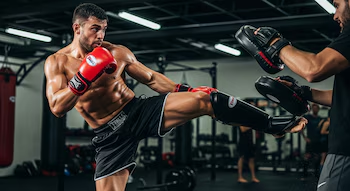
Recent research by Dr. E. Paul Zehr indicates that martial arts have the potential to significantly enhance emotional regulation and empathy. This practice transcends mere physical effort, tapping into complex neurophysiological mechanisms related to contact and emotional interaction. Participants practicing traditional martial arts not only forge better relationships within their training environment but can also transfer these skills to their everyday social interactions, fostering emotional well-being.
Moral Foundations of Martial Arts
Traditional martial arts are steeped in moral codes and ethical training. As emphasized by researchers like Guy Shpak in the Netherlands, principles such as self-discipline, courage, honor, and social responsibility are cornerstones of martial training. This moral framework provides a compelling distinction from other sports, as it instills values that contribute significantly to an individual’s character.
Values and Ethical Codes
The philosophical roots of disciplines like Okinawan karate stress “heart and character” over technical prowess, reinforcing a sense of social responsibility and camaraderie. Practitioners are taught that self-control and respect for others are not merely beneficial skills; they are essential components of everyday life. This ethical instruction serves as both a guide for personal behavior and a catalyst for social change.
Physical Training and Empathy in Action
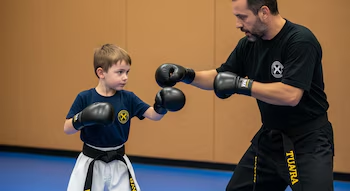
Physical contact is at the heart of martial arts training. Through partner exercises, practitioners engage in a dynamic exchange that fosters trust and mutual understanding. The nature of these interactions, whether in jujitsu or karate, emphasizes adaptability and responsiveness to one’s partner, cultivating a greater degree of empathy and emotional regulation.
Neural Mechanisms at Play
According to Shpak, these partner interactions activate neural networks, particularly mirror neurons, which aid in interpreting and mimicking others’ actions. This physical engagement creates an environment where emotional regulation and empathy are not just encouraged; they are integrated into the learning process.
The Role of Oxytocin
Another crucial component in this emotional development is oxytocin, often referred to as the “social hormone.” Research shows that even a single session of martial arts can significantly raise oxytocin levels, particularly during exercises involving prolonged physical contact. This increase not only enhances feelings of bonding but also helps mitigate stress, as indicated by correlations with cortisol levels.
Implications and Applications
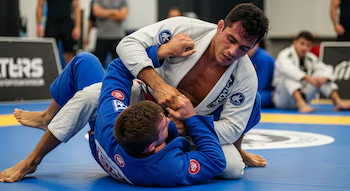
Traditional martial arts create unique environments that not only focus on physical training but also nurture emotional and cognitive development. This holistic approach stands apart from many competitive sports, providing benefits that extend beyond the dojo.
For practitioners like Shpak, continued engagement in martial arts has the potential for lasting changes in brain structures, promoting empathy beyond the training mat and into daily life. Current studies suggest that incorporating martial training into educational and integration programs could enhance empathetic relationships within communities.
In conclusion, traditional martial practices can significantly enrich interpersonal relationships by fostering empathy and emotional understanding through structured training and ethical principles, making them valuable tools for personal and social development.