
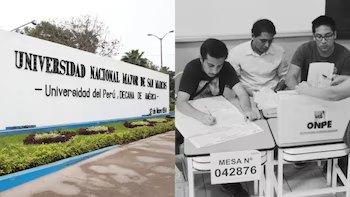
Delays in the Installation of Voting Stations at UNMSM During the 2026 Elections
The National University of San Marcos (UNMSM), recognized as the voting location with the highest number of stations in Metropolitan Lima, witnessed notable delays during the recent 2026 General Elections held on April 12. Setting up this hub effectively was crucial for smooth electoral proceedings, yet the installation of tables and the facilitation of voter access fell short of the anticipated schedule.
Causes of Delays
Despite the strategic significance of the UNMSM, the initiation of voting faced considerable holdups. Reports from Latin News indicated that voters were barred from entering until shortly after 7:00 AM, while press personnel accessed the premises at 7:03 AM. The ONPE had coordinated the establishment of 100 voting stations spread across six pavilions, intended to accommodate over 29,000 voters—a number unparalleled in any other local center.
The root of these delays can be traced back to the late arrival of several polling table members, who were expected by 6:00 AM but didn’t arrive until after 6:30 AM. Consequently, voters found themselves in long lines waiting for the official opening, as electoral staff rushed to finalize preparations within the designated classrooms. The ONPE reported that, across Metropolitan Lima and Callao, there were 2,260 voting locations set to receive more than 26 million citizens registered nationally.
Impact on Voters and the Electoral Process
The delays in table formation and access to pavilions exacerbated the waiting time for voters, emphasizing the critical role UNMSM played in the Peruvian electoral process. Many citizens, including a committed mother with her baby, proactively organized to establish a voting station due to the personnel shortages, reflecting a strong civic spirit amidst the disorganization.
Oversight by Authorities
In response to the electoral challenges, the Public Ministry deployed over 6,000 prosecutors nationwide as part of their “Crime-Free Elections” initiative. Supreme Prosecutor Frank Almanza emphasized that this presence aims to ensure compliance with electoral laws and facilitate immediate action against any irregularities. This includes coordination with electoral authorities and utilizing technological tools for real-time incident reporting. The objective is to safeguard the integrity of the electoral process at locations like UNMSM.
UNMSM: The Largest Voting Center
According to data from ONPE, the UNMSM leads in Lima with the largest number of polling tables. Following it, Ricardo Palma University hosts 80 tables, while IE 005 Rose of Saint Mary in Breña manages 70 tables. Other notable establishments include San Martin de Porres University and Emblematic IE Alfonso Ugarte, both featuring 65 tables.
Conclusion
The challenges faced at UNMSM during the 2026 Elections underscore the importance of timely logistics in electoral processes. Despite the setbacks, the collaborative efforts of citizens and oversight from various authorities exemplify a collective commitment towards upholding democratic principles, ensuring that every vote matters. The experience gained could pave the way for improved electoral organization in future elections.