
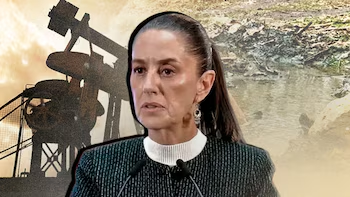
The Controversial Shift: From Criticism to Promotion of Fracking
The recent announcement by Mexico’s president, Claudia Sheinbaum, concerning the potential use of a more sustainable fracking method to boost natural gas production has sparked significant debate. Just a few years ago, Sheinbaum was a vocal critic of fracking practices, citing serious environmental and social concerns.
Criticism from Environmental Groups
In the lead-up to her announcement, various collectives and environmental organizations have expressed strong opposition to fracking, arguing that such projects demand high costs and advanced technologies, making them impractical for the current economic situation in Mexico. Greenpeace issued a statement criticizing the initiative and suggested that the country should redirect its scientific efforts towards reducing dependency on fossil fuels. They emphasized, “We don’t need fracking; we need equality, energy, and climate justice!”
A Shift in Position
Insider opinions reflect on how several users on social media have pointed out the irony of Sheinbaum’s changing stance. In 2015, Sheinbaum herself remarked, “The privatization of water to meet the needs of fracking is perverse and extremely serious,” in reference to the controversial energy reforms initiated by former president Enrique Peña Nieto.
Defending Sustainable Fracking
During her recent statement, Sheinbaum attempted to alleviate concerns by discussing the environmental ramifications of traditional fracking. She pointed out that while conventional methods pose significant risks through the intensive use of water and potentially harmful chemical injections, new technologies could mitigate these issues.
The Proposed Methodology
She explained that in traditional fracking, a well is drilled, and a mixture of water and chemicals is injected to fracture the bedrock, releasing gas. This liquid can remain trapped in deep layers of the subsoil, often beneath critical aquifers, presenting a significant environmental hazard. She argued that moving towards sustainable practices might reduce such risks.
Scientific Evaluation and Expert Input
Sheinbaum emphasized her administration’s commitment to conducting scientific evaluations to guide responsible decision-making. “We want experts to determine which chemicals to use, focusing on the recycling of water and its management,” she stated, advocating for methods that could alleviate the adverse impacts associated with traditional fracking.
Conclusion: A Controversial Path Forward
As Claudia Sheinbaum navigates this contentious territory, her policies may significantly shape Mexico’s energy landscape. While the proposal for sustainable fracking offers a pathway to increase natural gas production, it also contrasts sharply with her previous criticisms, raising questions about the motivations and implications of such a shift. Environmental advocates remain vigilant, raising concerns that despite the promise of sustainability, the nature of fracking itself may inherently challenge environmental justice.