
Tehran’s Envoys Meet with Shehbaz Sharif to Define Negotiation Parameters with the U.S.
The Iranian delegation recently convened with Pakistan’s Prime Minister Shehbaz Sharif to outline the framework for upcoming negotiations with the United States. This crucial meeting aims to pave the way for a potential ceasefire in the Middle East, highlighting the delicate balance of power in the region.
The Delegation and Their Mission
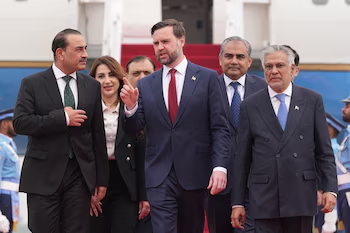
Led by Vice President J.D. Vance, the U.S. delegation arrived in Islamabad, focusing on achieving an end to hostilities. The backdrop to this engagement is marked by recent escalations between Israel and Hezbollah, complicating the chances for direct talks. The U.S. administration has emphasized its commitment to ensuring Iran does not develop nuclear weapons, marking it as a paramount objective of the negotiations.
Challenges Ahead
The mediation role played by Pakistan is critical; however, the ongoing violence in Lebanon poses significant hurdles. Israel has refrained from engaging in dialogues concerning ceasefires with Hezbollah, insisting that disarmament remains the primary agenda.
Statements from Key Players
In a statement reflecting Iran’s position, First Vice President Mohammad Reza Aref indicated that a successful agreement hinges on prioritizing U.S. national interests. Conversely, should discussions favor Israeli perspectives, the likelihood of resolving conflicts diminishes significantly.
International Reactions
The ongoing diplomatic efforts have drawn responses from various international actors, including Hamas, which voiced support for the negotiations, suggesting a two-week ceasefire between Iran and the United States. Conversely, Spain’s Foreign Minister Jose Manuel Albares emphasized the necessity for Iran to engage “in good faith” during talks.
Pakistan’s Role in Mediation
Prime Minister Shehbaz Sharif emphasized the talks as a “decisive moment” for regional stability. The Pakistani government is keen to facilitate continued dialogue among the involved parties. As the negotiations commence, the stakes are distinctly high, with both Iran and the U.S. encouraged to find common ground.
Future Developments
The Iranian delegation, consisting of over 70 members, includes high-ranking officials, technical teams, and negotiators who are crucial to shaping the discussions. Expectations are running high as global stakeholders look to Islamabad for a path forward that could potentially bring long-lasting peace to the Middle East.
Global References and Remarks
The ongoing conference in Islamabad has echoed calls from the United Nations for amicable dialogue to avert further hostilities. Secretary-General Antonio Guterres has publicly urged both nations to approach the negotiations with sincerity, aiming to establish a “lasting” peace agreement.
As the world watches, the outcome of these meetings could redefine not just U.S.-Iran relations but also the broader geopolitical landscape of the Middle East.