
Iranian Regime on High Alert: Response Prepared for U.S.-Israeli Attacks
The Iranian regime has declared that it remains vigilant and prepared to respond to any U.S. or Israeli aggression, indicating a heightened state of alert amidst escalating tensions.
A State of Maximum Alert
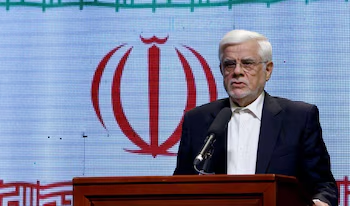
Iran’s First Vice President, Mohammad Reza Aref, emphasized that no threat is beyond their military preparation and intelligence capabilities. This statement comes in light of recent warnings from both the White House and tightening U.S. measures aimed at controlling the strategically vital Strait of Hormuz.
Aref stated, “National security and infrastructure sustainability are subject to precise calculations,” suggesting that the Iranian regime has meticulously outlined its response strategies for various potential scenarios.
Responding to U.S. Warnings
The Iranian government’s rhetoric intensified following statements by U.S. President Donald Trump, who hinted at severe consequences, including the potential “annihilation of an entire civilization” should Tehran ignore American demands. U.S. Vice President J.D. Vance echoed this sentiment during a recent press conference, claiming, “We have tools in our arsenal that, until now, we have not decided to use… The president can decide to use them, and he will if the Iranians do not change their behavior.”
Diplomatic Stance at the UN
Amir Saeid Iravani, Iran’s ambassador to the UN, dismissed any possibility of a temporary ceasefire, asserting that the regime would not yield to military or diplomatic pressure. He demanded any agreement to include “credible and verifiable mechanisms” that guarantee an end to aggression.
Iravani criticized the U.S. administration for its perceived efforts to manipulate international organizations, specifically calling out “unbalanced and destabilizing” resolutions affecting the Strait of Hormuz.
Control Over the Strait of Hormuz
The Iranian regime has positioned itself firmly in control of the Strait of Hormuz, a pivotal route for global energy trade where approximately 20% of the world’s oil transits. The regime claims to respect freedom of navigation but has taken measures to prevent the use of the strait by “aggressors and their allies,” namely the United States and Israel.
Nuclear Program Controversies
While facing accusations from Western nations regarding its nuclear ambitions, Iravani reiterated that Iran’s nuclear program does not have military aims. He underlined that Iran has been subjected to international inspections, asserting, “There has never been evidence of weapons development,” despite ongoing suspicions from the international community.
Regional Repercussions
The implications of these tensions transcend Iran, as Bahrain’s Foreign Minister, Abdullatif bin Rashid Al Zayani, warned that the patience of Gulf states regarding Iranian aggression is limited. He stated, “Our rights cannot be restricted by inaction,” signaling a readiness to defend regional sovereignty.
The situation surrounding Iran reflects a precarious balance of power in the Middle East, with both sides poised to respond to any perceived threats. As the Iranian regime asserts its military preparedness, the international community watches closely, aware of the potential ramifications for global energy supply and regional stability.