
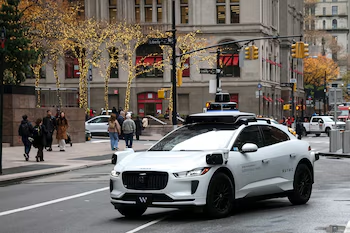
Waymo’s Permit Expiration and Testing Restrictions in New York
Waymo’s autonomous vehicle testing in New York has come to a halt following the expiration of its permits. These permits allowed the operation of autonomous vehicles in select areas of Brooklyn and Manhattan, but they officially lapsed on March 31.
Safety Measures During Testing
Under the expired permits, Waymo operated with Jaguar I-PACE vehicles, ensuring that each journey was supervised by a human co-pilot. This arrangement aimed to address ongoing concerns regarding public safety and the lack of local regulatory frameworks for autonomous technology.
A representative from the New York Department of Transportation (DOT) confirmed the expiration, emphasizing the tension between technological advancement and local regulatory measures. This situation mirrors broader concerns from authorities and transport unions regarding the integration of autonomous vehicles.
Current State of Operations
Waymo’s vehicles remain operational, albeit in manual mode, primarily for data collection purposes. The company is now awaiting the renewal of its state permits, which are currently the subject of discussions within Albany’s legislative budget debates.
Political Landscape and Challenges Ahead
The shutdown of testing comes at a time when New York’s Governor Kathy Hochul has shifted her stance on the expansion of autonomous vehicles in the state. Previously supportive, Hochul’s recent decisions have stifled legislative momentum for broader autonomous vehicle deployment.
Despite spending over $3 million on lobbying for favorable municipal and state regulations, Waymo has yet to secure the necessary authorization to resume its testing in New York City. In 2021, a bill was introduced to eliminate the requirement for a human driver in autonomous vehicles, but progress has stalled.
Community Responses and Regulatory Concerns
Opposition groups, including the New York Taxi Workers Alliance, argue that city and state authorities are ill-prepared to handle the regulatory environment required for autonomous vehicles. They warn that without established policies, technology companies could dictate future regulations, potentially jeopardizing jobs in the traditional transport sector.
Technological Promise Versus Practical Challenges
Waymo maintains that its technology offers improved safety compared to human drivers, citing data indicating a significant reduction in serious accidents. Public support, as reflected in surveys from locations like San Francisco, shows a favorable perception of Waymo’s services.
Yet, New York presents unique challenges, including a dense urban environment filled with pedestrians, cyclists, and diverse mobility tactics. Experts like Sam Schwartz highlight that the complexities of such an environment require careful consideration before integrating autonomous vehicles.
As the legislative discussions unfold, Waymo’s future in New York remains uncertain. The outcome will heavily depend on regulatory clarity and community acceptance, crucial elements for any potential resumption of autonomous vehicle testing in the city.