
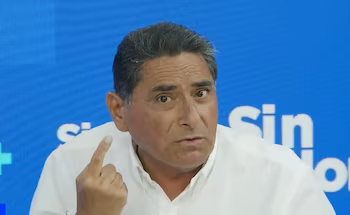
Carlos Álvarez’s Rising Popularity
The recent electoral surveys have shown a significant shift in the Peruvian political landscape, with Carlos Álvarez, the presidential candidate from País para Todos, now occupying the second position in voter preferences. Following closely behind Keiko Fujimori, Álvarez has surpassed former Lima mayor Rafael López Aliaga, showcasing his growing influence.
Calm Before the Vote
In a statement from Cajamarca, Álvarez expressed his confidence as the elections on April 12 approach. He emphasized a calm demeanor, stating, “We wait for April 12 with tranquility, with serenity and we trust in a thoughtful vote.” His approach contrasted sharply with the often confrontational tactics seen in political campaigns.
Focus on Proposals and Solutions
Álvarez’s emphasis on realistic proposals and solutions rather than provocations points to a strategic campaign focused on problem-solving. He has outlined plans tailored to address critical issues, such as the high rates of anemia affecting 40% of the Cajamarca population. “Citizens look for solutions,” he affirmed, illustrating his philosophy to engage constructively with voters.
Current Polling Analyses
According to the latest mock voting conducted by private firm Datum, Keiko Fujimori leads with approximately 18.1% of valid votes. Notably, Álvarez and López Aliaga are in a tight race, with 10.8% and 10.3%, indicating a competitive dynamic leading up to the elections. Jorge Nieto, Roberto Sánchez, Ricardo Belmont, Marisol Pérez Tello, and Alfonso López Chau follow, each with varying degrees of support.
Understanding the Voter Base
Underlining the importance of demographics, Álvarez referenced the alarming statistic that 17% of young people are neither studying nor working. “It is a region with a lot of potential and wealth, but it requires more opportunities and support,” he said, showcasing his focus on youth engagement and economic development.
Public Sentiment and Electoral Fragmentation
Urpi Torrado, the director of Datum, has highlighted the high level of vote fragmentation, signaling that the electoral landscape remains unstable as the election date nears. This fragmentation indicates that while some candidates may seem ahead, the situation is fluid, and voter support can shift significantly in a short period.
Other Poll Insights
Further analysis from CPI echoed similar sentiments, with Fujimori leading but closely shadowed by both López Aliaga and Álvarez. This consistency across multiple polling firms suggests that the momentum for Álvarez may be building as he taps into the electorate’s desire for change, particularly among younger voters.
Conclusion: A Wait for April 12
As the countdown to the elections continues, Carlos Álvarez positions himself not just as a candidate, but as a viable alternative, aiming to capture the attention of voters seeking genuine solutions to pressing issues. The forthcoming elections promise to be a critical moment for him and the political landscape in Peru.