
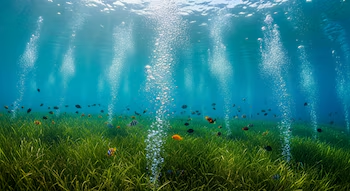
Seagrass Restoration in California: A Game Changer for Coastal Biodiversity
A groundbreaking experiment on Catalina Island has redefined our understanding of seagrass restoration, showcasing its potential to enhance coastal biodiversity significantly. Conducted by scientists from the University of California, this project focused on the native seagrass species Zostera marina, demonstrating that newly restored grasslands could surpass the biodiversity and health metrics of established natural ecosystems in just two years.
The Importance of Seagrasses
Seagrasses are pivotal for marine health, acting as natural carbon sinks by storing CO₂ in sediments. They provide essential habitat for various marine species, contributing to the richness of biodiversity in coastal environments. Their restoration is not just about conservation; it’s crucial for addressing climate change and promoting ecosystem resilience.
Innovative Restoration Techniques
The study, led by doctoral student Rilee Sanders from the Scripps Institution of Oceanography, represents the first successful seagrass restoration effort on Catalina’s open coast, moving beyond traditional practices confined to protected bays. The team collaborated with environmental organizations like The Bay Foundation and Paua Marine Research Group after nearly a decade of research into local marine ecosystems.
In June 2022, the restoration process commenced with the transplant of Zostera marina in an exposed coastal area. Remarkably, within just one year, the restored site began functioning as a vibrant marine habitat, serving as a refuge and breeding ground for numerous fish species. By the end of the second year, biodiversity metrics from the restored site had outperformed those of natural grasslands.
Environmental Benefits of Seagrass
The ecological implications of restoring seagrasses are vast. According to University of California researchers, these habitats act as ecosystem engineers, creating submerged structures that significantly enhance ecological balance and contribute to food security. Their ability to sequester carbon mitigates climate change impacts, while the shelter they provide increases the survival rates of juvenile fish and other marine organisms, amplifying local biodiversity.
However, these delicate ecosystems face mounting threats from coastal development, invasive species, and fishing pressures. Thus, prioritizing seagrass restoration, particularly in exposed coastal regions, is vital for bolstering marine ecosystem resilience.
Unforeseen Results and Future Prospects
The Catalina Island initiative highlighted that restoring seagrasses in open ocean areas is not only feasible but may yield superior results to those obtained in sheltered bays. During monitoring, researchers made an exciting discovery: the presence of an endangered sea turtle in the restored area, indicating that enhanced habitats can quickly attract species that typically avoid less structured environments.
The results indicate that open coastal areas might provide broader opportunities for seagrass restoration, helping to combat habitat loss driven by human activity and climate change. The Catalina model can serve as a global reference, informing similar projects elsewhere and positioning California as a leader in nature-based environmental solutions.
Conclusion
The restoration efforts on Catalina Island have opened new avenues for understanding and implementing seagrass restoration. As scientists continue to uncover the rich secrets of these underwater ecosystems, the implications for coastal biodiversity and climate resilience become increasingly clear. The positive outcomes from this project lay a foundation for future ecological initiatives that could reshape how we approach coastal conservation globally.