
Extraordinary Search Operation by the US
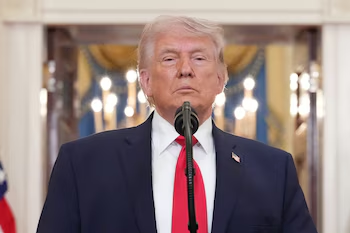
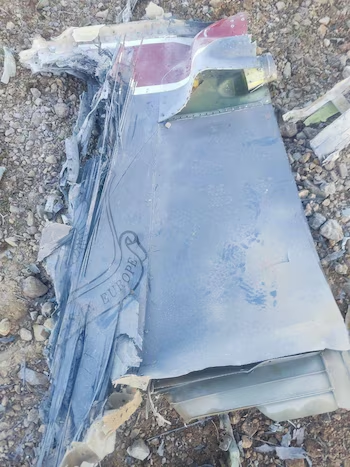
In a dramatic turn of events, President Donald Trump has initiated an extraordinary search operation to rescue the pilot of an F-15E fighter jet that was shot down by Iranian anti-air defenses.
Challenges of the Rescue Mission
The mission is notably complex and open-ended, primarily because the pilot fell in a remote and mountainous area in Kohgiluyeh and Boyer-Ahmad province, which is under the control of the Iranian Revolutionary Guard. This location poses significant challenges for a successful rescue operation.
Kohgiluyeh and Boyer-Ahmad is an interior province of Iran that does not border any Middle Eastern country, complicating the U.S. response. As Iran is equipped with advanced radar and satellite information, heavily supported by China and Russia, the U.S. must tread carefully.
Geographical and Tactical Implications
The nearest allied countries, Iraq, Kuwait, and Saudi Arabia, represent the forward bases from where the U.S. would launch its rescue efforts. This geographical positioning heightens the operational risks facing U.S. forces in the region.
U.S. and Allies Support for the Rescue Efforts
The search and rescue operation is being coordinated by the U.S. and is also supported by Israel, the Arab League, and NATO. Trump’s understanding of the Middle Eastern landscape, particularly the historical implications of previous incidents like the Iran Hostage Crisis during President Jimmy Carter’s tenure, is shaping the current response.
In a remarkable departure from his usual schedule filled with leisure activities, Trump remained in Washington to conduct multiple meetings with his National Security advisors, foregoing media interactions.
Rapid Response Under Fire
When the F-15E was shot down, Black Hawk helicopters were deployed to rescue the downed pilots, both of whom ejected and activated their emergency radios. One pilot was successfully rescued; however, the helicopters had to withdraw due to sustained artillery fire from Iranian forces.
According to White House sources, nighttime conditions were crucial for survival for the pilot left behind. It was noted that chances for rescue will diminish significantly with the advent of daylight.
The Stakes of the Operation
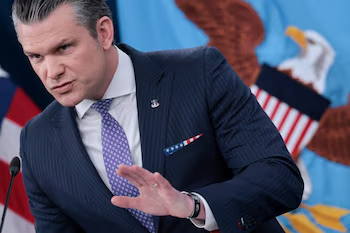
The incident has put Secretary of War Pete Hegseth in a difficult position, as he had previously asserted that the U.S. controls Iranian airspace. This assertion was quickly undermined by the Iranian defense’s swift actions, resulting in the F-15E being shot down and complications arising from both Black Hawk helicopters and a nearby A-10 Warthog.
The successful rescue of the pilot is critical, not only for operational integrity but also for preventing Iran from claiming a potential triumph in negotiations. Trump’s directive to deploy Special Forces underlines the urgency and seriousness of the situation.
As developments unfold, Trump is yet to publicly acknowledge the downed pilot or the circumstances surrounding the F-15E’s downfall. Consultations with Secretary of State Marco Rubio and Hegseth continue as the administration plans the next actions in the complex rescue mission.