
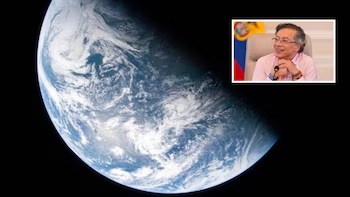
Gustavo Petro’s Urgent Call for Decarbonization in Response to Artemis II’s Earth Images
NASA’s Groundbreaking Artemis II Images
On April 3, 2026, the world was captivated by the first images of Earth captured by NASA’s Artemis II mission. These stunning visuals showcased our planet in all its glory, highlighting regions like Africa and Europe, as well as celestial phenomena such as the northern lights. Captured by mission commander Reid Wiseman, these images were accompanied by NASA’s enthusiastic greeting, “Hello, world.” The spacecraft, which launched from Kennedy Space Center on April 1, is on a journey that includes a 1.1-million-kilometer trek around the Moon.
Gustavo Petro’s Immediate Reaction
Following the release of these breathtaking images, Colombian President Gustavo Petro took to social media to emphasize the importance of transforming NASA into a collaborative global effort. He stated, “The less oil and hydrocarbons you use, the less gasoline you put into wars.” His remarks underscore an urgent message: humanity must prioritize decarbonization to ensure a sustainable future for our planet.
Petro further articulated this notion, saying, “We have two options, either let life disappear from this beautiful blue sphere or decarbonize the economy.” This call to action resonates deeply in the current climate crisis, highlighting the necessity for immediate and structural changes in how we interact with our environment.
The Vision for a Unified Future
Petro’s message extended beyond environmental concerns; he also envisioned a world united in its cultural diversity. His remarks suggested that NASA’s origins during the Cold War could pave the way for a new era characterized by peace and global collaboration. He proposed that instead of continuing divisive practices, humanity should unite to “bring life to the universe.”
The Significance of the Images
The release of these images was not just a technological achievement; it served as a powerful impetus for political and social reflection. They present the Earth as a fragile oasis in the vast universe, challenging leaders and citizens alike to reconsider their roles in safeguarding it.
As astronauts like Jeremy Hansen described their amazement at seeing Earth from space, it becomes evident that these experiences can alter perceptions and inspire action towards a more sustainable future. The awe of seeing the planet from such a unique vantage point speaks volumes about the importance of preserving its beauty and resources.
The Broader Debate on Decarbonization
In his message, Petro linked technological advancements with the urgent need for an overhaul in international governance. He stressed the importance of overcoming conflicts fueled by fossil fuels, advocating for “democratic global governance” to prevent wars driven by oil hegemony. His assertion makes it clear: humanity must choose between perpetuating destructive conflicts or embracing a future of unity and peace.
Upcoming Global Summit on Fossil Fuels
To further this agenda, Petro announced an upcoming summit in Santa Marta, Colombia, set for April 24-29, 2026. The summit aims to gather representatives from 45 nations to discuss energy transition and strategies for reducing dependence on hydrocarbons. With the backdrop of the Artemis II mission’s inspiring images, this event is poised to become a pivotal moment in the fight for our planet’s future.
Conclusion
Gustavo Petro’s reaction to the breathtaking images of Earth from NASA’s Artemis II mission encapsulates a critical turning point in our collective journey towards sustainability. His calls for decarbonization and global cooperation highlight not only the challenges we face but also the opportunities for transformative change. The stunning visuals from space serve as a reminder of our shared responsibility to ensure that life thrives on our planet, reinforcing that the fate of humanity is intricately tied to the choices we make today.