
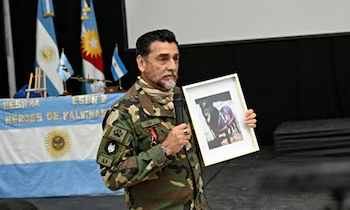
José Cruz: A Journey Back to the Malvinas
“He’s alive, he arrives tomorrow.” These were the hopeful words of Rubén Cruz, assuring his wife that their son, José Cruz, would return from the uncertainties of war. José, at just 21 years old, was drafted into military service on April 2, 1982, and soon found himself on the Malvinas Islands, forever changing his life and that of his family.
The Dogs of War
When José arrived, it became apparent that he would not be alone; he was among the members of the Perros de Guerra section, tasked to select 18 service dogs for deployment. “My dog was one of the best prepared,” he recalls, reflecting on the pivotal moment when he had to make a life-altering decision.
Many veterans later discussed their opportunities to choose whether to go into combat. José’s choice wasn’t one he took lightly: “I didn’t hesitate. It took me 28 years to start talking about the Malvinas.” His experiences, laden with emotional consequences, shaped not only who he was but how he viewed his duty.
Emotional Bonds with Four-Legged Soldiers
During the grueling days on the Malvinas, José noted how both soldiers and dogs suffered from cold and hunger: “Our dogs ate frozen meat, and if the sun didn’t come out, they didn’t have anything.” Their bond was profound; he described how, when rations ran low, he shared his own food with his dog. “Half of my ration was for my dog,” he said with emotion.
José expressed pride in the dogs’ contributions, stating, “They are four-legged soldiers”, recognizing their sacrifices alongside his own. His dog returned from the retreat but was the only one that had a grave. “The bond is eternal,” he asserts poignantly, a testament to the connection forged in both hardship and companionship.
Confronting the Aftermath: Return and Recovery
Returning to the warm embrace of family was bittersweet. One cherished memory remains when José approached the Punta Alta post office to communicate with his father during a tumultuous time. “My heart wanted to come out of my mouth,” he recalls, describing how the dread of not knowing turned into gratitude. His father’s words, ‘Thank God, I’ll be waiting for him tomorrow’, encapsulated a sense of relief and hope.
Healing from War’s Wounds
However, the emotional scars were deep. “I came back broken, empty,” he admitted, reflecting on the personal relationships affected by his experiences. Over the years, rebuilding relationships with his daughters and former partner became vital: “I had to apologize a thousand times,” he stated, emphasizing the importance of addressing emotional turmoil.
After years of therapy, José found a renewed sense of purpose. “Rebuilding from great misery is possible,” he emphasizes, hoping to share his message with future generations.
Symbols and Lessons
One of the most poignant symbols of his service is a flag he found during the war. “A flag is not abandoned, it is always someone’s responsibility,” he reflects, drawing parallels to life’s responsibilities. This flag represents the memories and lessons learned amidst the chaos of conflict.
Today, José Cruz carries his story into classrooms, teaching values and encouraging youth to overcome their own battles. “We have all suffered battles,” he declares, aiming to inspire resilience and understanding every April 2 on the anniversary of the conflict.