
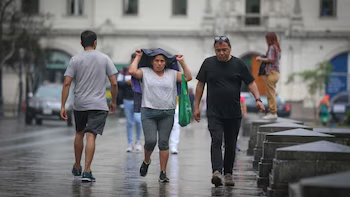
Ongoing Rainfall Concerns from Senamhi
The National Meteorology and Hydrology Service of Peru (Senamhi) has reported persistent heavy rains across the country, indicating an extension of the rainfall season even as autumn commences. This increased precipitation has raised concerns about potential landslides and associated damages.
Forecast of Continued Precipitation
Engineer John Cisneros, a meteorology specialist at Senamhi, announced that “the rainy season is not over yet” and significant precipitation is expected to persist at least until mid-April. This forecast is linked to warm sea conditions intensifying rainfall, particularly affecting Cusco, Ayacucho, and Loreto, which have already faced adverse impacts.
Magnitude and Weather Impacts
According to Senamhi’s predictions, accumulations may reach up to 22mm per day in the southern mountain range and 18mm per day in central regions. This volume of rain will also feature electrical discharges and wind gusts potentially exceeding 35 km/h.
Geographical Spread of Effects
These severe weather conditions will influence both mountainous areas and lower-elevation regions, including parts of the Amazon. Notably, precipitation can manifest as hail and snow in high altitudes, alongside thunderstorms.
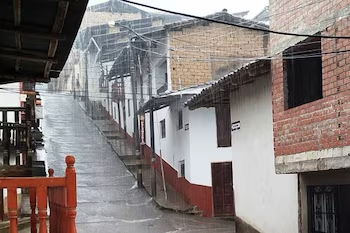
Explaining the Prolonged Rain Phenomenon
Cisneros highlighted that warm sea conditions primarily drive the extended rain period, which disrupts the typical end of the summer season. Although these rains are classified as seasonal, the “coastal child” phenomenon currently has a muted impact, leading to heightened precipitation intensity.
Geographical Patterns and Impacts
The combined effects of these rains and elevated sea temperatures are creating severe weather risks, including potential landslides and further stream activations in sloped areas.
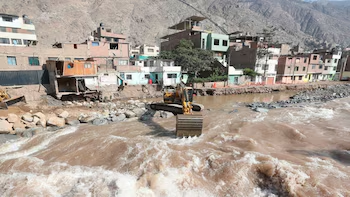
Warnings in Effect for Affected Regions
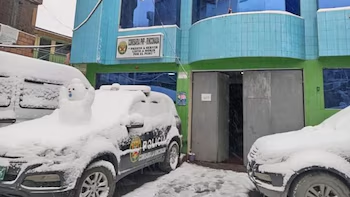
Senamhi’s Notice No. 121 and other communications noted that the central and southern mountains will experience light to moderate rain, hail, and snow in early April. Areas above 2,800 meters will likely see hail, while regions above 3,800 meters could experience snowfall.
Impact of Weather Events
The rain’s intensity may vary and be localized, especially affecting regions such as Áncash, Apurímac, Arequipa, Cusco, and others. Thunderstorms and strong winds pose risks to the population and travelers in these areas.
Recommendations for the Public
In light of these weather conditions, the public is urged to stay informed through Senamhi’s official reports, to avoid travel in risky areas during unstable weather, and to exercise caution in outdoor activities. Safety should be the top priority to minimize risks from landslides and stream activations.