

Current Challenges in Spain’s Rail Sector
Ouigo and Iryo are vocalizing their frustrations regarding the limitations imposed by the current Spanish railway system, particularly the dual track gauge. They assert that this archaic structure significantly hampers their competitiveness, particularly against Renfe, the dominant operator. The absence of rolling stock for these companies exacerbates the situation, creating a substantial barrier to entry in the market.
The CNMC Report
The National Markets and Competition Commission (CNMC) has recently released a critical document titled “Report on technical barriers to the provision of railway services”. This report outlines the pressing need for Spain to enhance interoperability with neighboring countries to optimize passenger and freight movement. However, the report identifies track width discrepancies as a significant obstacle with notable economic implications.
Raising Concerns
According to the CNMC document, Ouigo and Iryo have expressed their concerns clearly. They indicate that the current uncertainty regarding the Gauge Migration Plan and the unification of the electrification system complicates strategic investment decisions. Operators are urging that a clear and executable Gauge Migration Plan be established promptly for the betterment of the railway system.
Defensive Stance of Renfe and Adif
On the other hand, Renfe and Adif maintain that adapting to the standard gauge poses an economically unfeasible challenge. They argue that implementing gauge change technology within existing infrastructure is less disruptive and less costly than overhauling entire railway systems. In their defense, they note that while two manufacturers can provide variable gauge rolling stock, the associated production requirements are niche and rarely demanded on a global scale.
The Bottleneck Problem
Ouigo and Iryo argue that reliance on wide gauge technology significantly stifles their potential. They point out two critical issues:
- CAF can produce trains with variable gauge technology, but they are only approved for travel up to 250 km/h.
- Talgo, the only manufacturer with trains permitted to travel at 350 km/h, has its production allocated to Renfe, limiting availability for other operators.
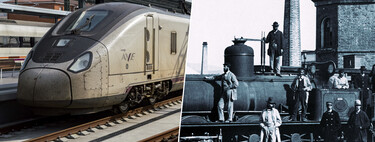
Renfe’s Competitive Edge
The reluctance of Adif and Renfe to adapt is not surprising. For Adif, the prospect of significant financial investment is daunting, especially when current corridors mainly operate on a standard gauge. Similarly, Renfe is unwilling to relinquish its control over high-speed routes, particularly in regions like Galicia, which have shown significant travel growth, making air travel more burdensome for passengers.
The Galician corridor, in particular, has emerged as one of the most lucrative regions for transport. The increasing demand for rail travel has pressured airlines and created a favorable environment for Renfe, which is currently the only operator providing transfers-free travel on these routes.
As companies like Ouigo and Iryo prepare to enter competitive discussions with Renfe, the landscape of Spain’s railway transport remains at a crossroads, caught between historical choices and modern demands for efficiency and interoperability.
For further insights, you can explore related issues around railway transport revolution in Europe, and the implications of track gauges on international collaborations.
Photo credits: Falk2
For more updates, check out our coverage of the latest in railway transport developments in Xataka.