
Tremor Reports in Mexico: Seismic Activity on March 30, 2026
Recent Earthquakes
On March 30, 2026, Mexico experienced notable seismic activity, with the National Seismological Service (SSN) reporting several earthquakes of varying magnitudes.
- A magnitude 4.3 earthquake struck 66 kilometers northwest of Cintalapa, Chiapas at 7:51 PM, with a depth of 148 kilometers.
- Earlier that day, at 4:02 PM, a magnitude 4.2 tremor was recorded 91 kilometers southwest of Hidalgo City, Chiapas, occurring at a shallower depth of 6.3 kilometers.
Overview of Seismic Activity
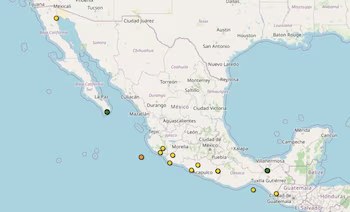
The SSN indicated that these movements predominantly displayed low to moderate intensity, with no serious damage or reported injuries. The earthquakes were spread across several regions of Mexico, primarily affecting the states of Guerrero, Oaxaca, Chiapas, Colima, and Veracruz. The highest levels of activity were observed along the South Pacific coast and in some southeastern areas.
Magnitude and Depth
The range of earthquake magnitudes reported on this day varied from 2.2 to 4.3, with most tremors being mild and perceived mainly in proximity to their epicenters. The strongest quake, measuring 4.3, was linked to a deeper event, while the more shallow ones registered notably closer to the surface.
Here’s a summary of the key earthquakes recorded:
- 3.9 – 33 km southeast of Crucecita, Oaxaca (depth: 10.9 km)
- 3.9 – 81 km southwest of Pinotepa Nacional, Oaxaca (depth: 30 km)
- 3.8 – 29 km southeast of San Marcos, Guerrero (depth: 24.4 km)
- 3.7 – 39 km southwest of Mapastepec, Chiapas (depth: 81.3 km)
- 3.6 – 27 km south of Ometepec, Guerrero (depth: 30.2 km)
Earthquake Monitoring in Mexico
It is important to note that the SSN does not operate the seismic alerts in Mexico. Instead, this responsibility falls to the Seismic Instrumentation and Registration Center (CIRES), which manages the Mexican Seismic Alert System (SASMEX). This system utilizes sensors distributed across regions of high seismicity, allowing rapid detection of seismic activities and timely dissemination of alerts to cities like Mexico City, Acapulco, and Oaxaca.
Understanding Seismic Activity
Mexico’s geographical position on five major tectonic plates (North American, Pacific, Cocos, Rivera, and Caribbean) contributes to its heightened seismic activity. The interaction between these plates creates continuous friction and energy release, which results in frequent earthquakes, particularly along the Pacific coast.
Recommendations for Residents
Authorities advise the public to remain calm, heed Civil Protection’s instructions, and stay updated with official announcements. Despite the tremors, the day concluded without any significant damage or emergencies reported.
Conclusion
The seismic events recorded on March 30 serve as a reminder of Mexico’s dynamic geological landscape. Continuous monitoring and advanced alert systems play a crucial role in ensuring public safety in the face of these natural occurrences. Residents are encouraged to familiarize themselves with safety measures and stay informed about seismic activity in their area.