
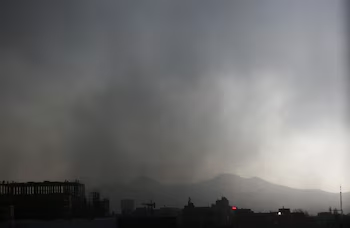
Blackouts in Tehran Amid Escalating Israeli Attacks
Recent Developments in Tehran
This past Sunday, significant portions of Tehran were plunged into darkness following a wave of bombings targeting the Iranian capital’s electrical grid. The recent attacks also impacted two power plants in Isfahan, which together produce over 1,100 megawatts of electricity. The Iranian Ministry of Energy confirmed the blackouts affecting Tehran and neighboring Alborz province through state television, IRIB, and highlighted that technical teams were engaged in efforts to restore power.
Impact on Residents and Essential Services
The blackouts disrupted not only residential areas but also essential services, occurring during the night when reliance on electricity is critical. Although officials did not disclose the total number of affected individuals, it’s notable that Tehran and its metropolitan area are home to over 15 million residents. The Ministry of Energy noted that ongoing attacks have hindered repair efforts significantly.
Damage in Isfahan and Victims of the Conflict
In Isfahan, located approximately 340 kilometers south of Tehran, the bombings targeted two key power plants with capacities of 914 and 250 megawatts. The province’s governor, Mehdi Jamali Nejad, acknowledged the damage and mentioned that parts of the Mobarak steel plant were also hit. Tragically, reports indicate at least 25 workers have died in recent attacks, although specific details regarding the locations of these incidents remain unclear.
Political Reactions and International Implications
Sunday’s bombings coincided with Iranian President Masud Pezeshkian’s denunciation of what he termed Washington’s “contradiction” in foreign policy. During a phone call with Pakistani Prime Minister Shehbaz Sharif, Pezeshkian claimed that the United States continues to target energy infrastructure despite previously announced moratoriums. This contradictory approach, he indicated, has intensified Iran’s distrust toward the U.S.
Former President Trump had issued ultimatums to Iran, demanding the reopening of the Strait of Hormuz while threatening to destroy its power plants if demands were not met. Such developments underscore the precarious nature of diplomatic relations amid ongoing military actions.
Humanitarian Crisis and Infrastructure Damage
The ongoing conflict has led to dire circumstances. Official Iranian figures cite approximately 1,500 fatalities and more than 15,000 injuries, along with extensive damage to civilian infrastructure. Iranian Energy Minister Abbas Aliabadi reported significant impacts on water facilities and confirmed damage to over 81,000 civilian sites.
The South Pars gas field, which supplies about 70% of Iran’s natural gas, was bombed last week, exacerbating the vulnerability of the country’s electrical grid, which relies heavily on gas.
Economic Ramifications and Future Outlook
Amid these tensions, the de facto closure of the Strait of Hormuz has driven Brent crude prices above $110 per barrel, signaling potential economic repercussions globally. Pakistan has emerged as a potential mediator, asserting that it will facilitate direct talks between the involved parties in the forthcoming days.
In conclusion, the situation in Iran remains perilous, compounded by military actions, political rhetoric, and a severe humanitarian toll. The international community is closely monitoring the developments, recognizing the broader implications of this ongoing conflict.