
Turning Waste into Resource
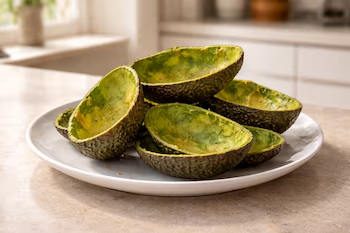
In San Francisco Pichátaro, a Purépecha community in Michoacán, avocado is the cornerstone of the local economy. This region produces approximately 42,000 tons of avocados annually; however, 5,000 to 7,000 tons are discarded as waste, primarily in the form of peels and pits.
In 2023, Dr. Michael Rivero from the UNAM Materials Research Institute realized that the local wastewater treatment plant was underperforming, posing risks to community health and agricultural outputs.
Dr. Rivero, along with fellow researcher Sayra Orozco, initiated a project titled “Development of Functional Materials for the Treatment of Wastewater for a Fair and Affordable Development of Rural Purépecha Communities” with funding from the Ministry of Science, Humanities, Technology, and Innovation (Secihti).
Innovative Water Purification Using Avocado Waste
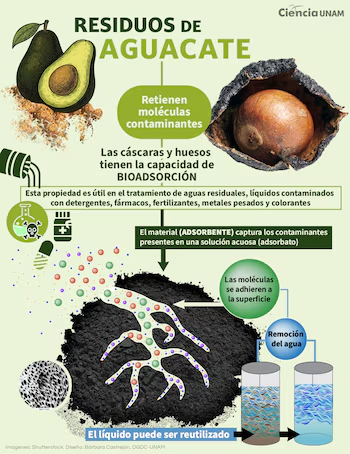
The research team conducted an analysis of the water quality index (WQI) to identify contaminants. Their solution involves converting avocado waste, particularly peels and pits, into biomaterials capable of absorbing pollutants.
Process of Transformation
The process begins with collecting the avocado waste, followed by washing, cutting, drying, and grinding it into a fine powder. When observed at a microscopic level, this powder reveals structures that function as bioadsorbents, particles that effectively trap contaminants.
To enhance effectiveness, the biomass undergoes physical, chemical, or thermal activation to increase its porosity and convert it into activated carbon.
Effective Results from Laboratory Tests
Preliminary laboratory tests have yielded promising outcomes. Using these biomaterials in adsorption columns, the water quality index increased from 30 to 71, rendering the water safe for agricultural irrigation.
Empowering the Community
The project is now progressing toward prototype implementation on a pilot scale within the community, allowing residents to produce and utilize these materials for enhancing local water management.
Furthermore, the research team is exploring alternatives for the safe disposal of captured contaminants, such as controlled incineration or desorption processes to prevent further environmental challenges.
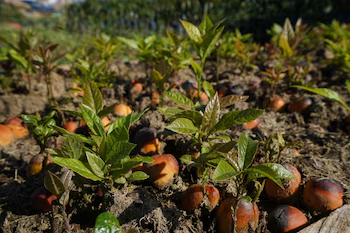
This innovative method not only enhances local water quality but opens avenues for repurposing other organic materials like mango peels, further amplifying its applicability in sustainable waste management.